


 +38 068 277 99 23


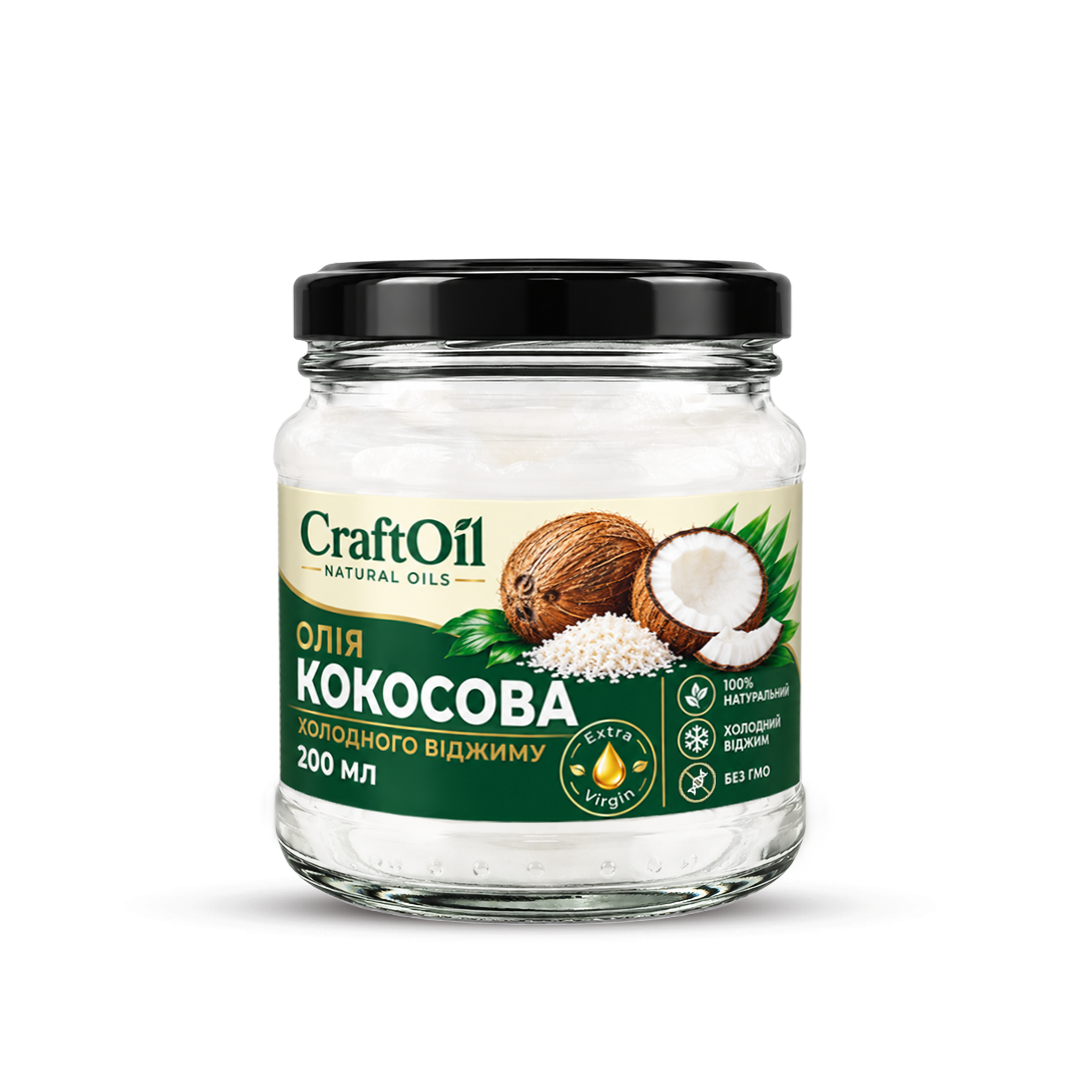
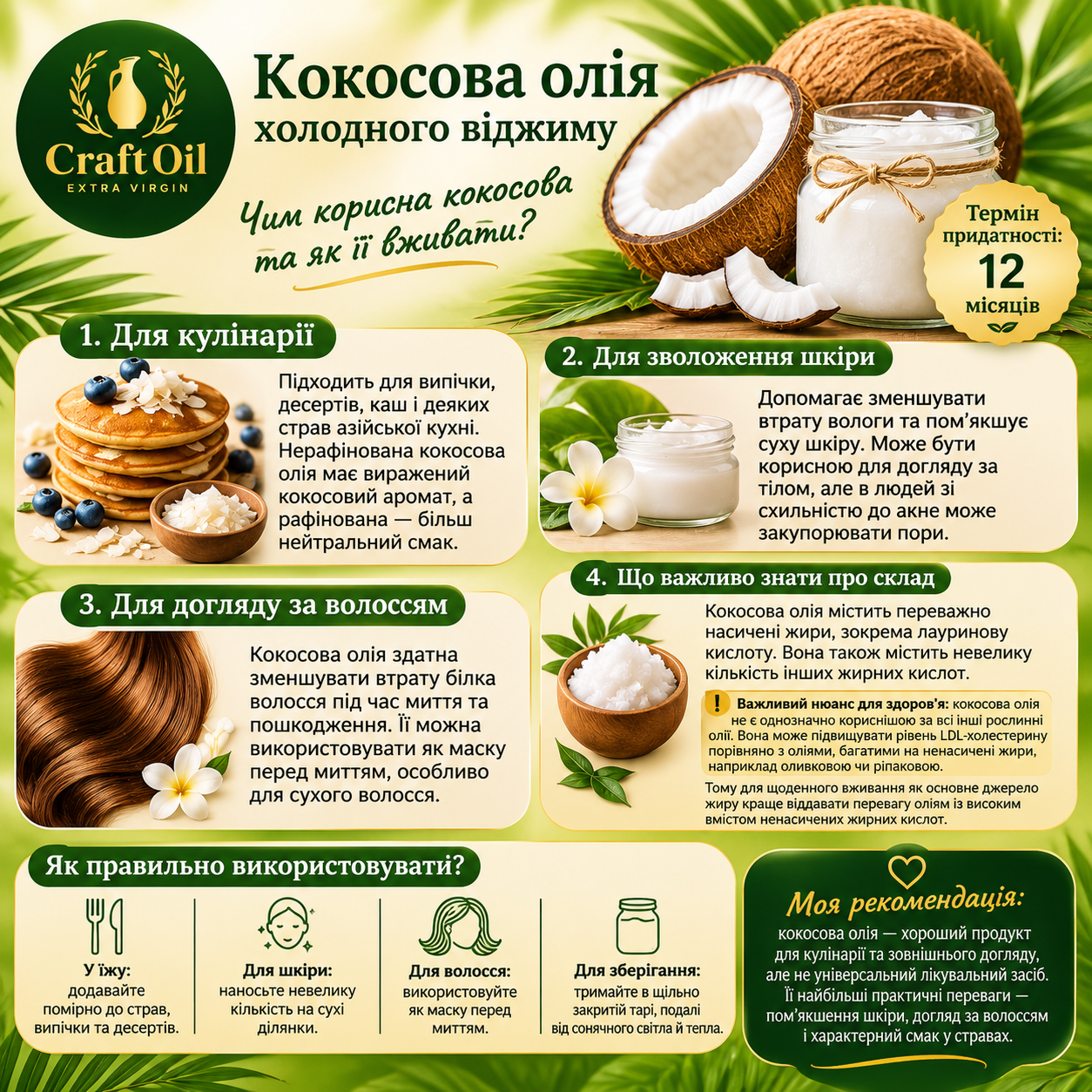


Craft Oil is delicious and healthy high-quality cold-pressed oils created with love and care.
[...]

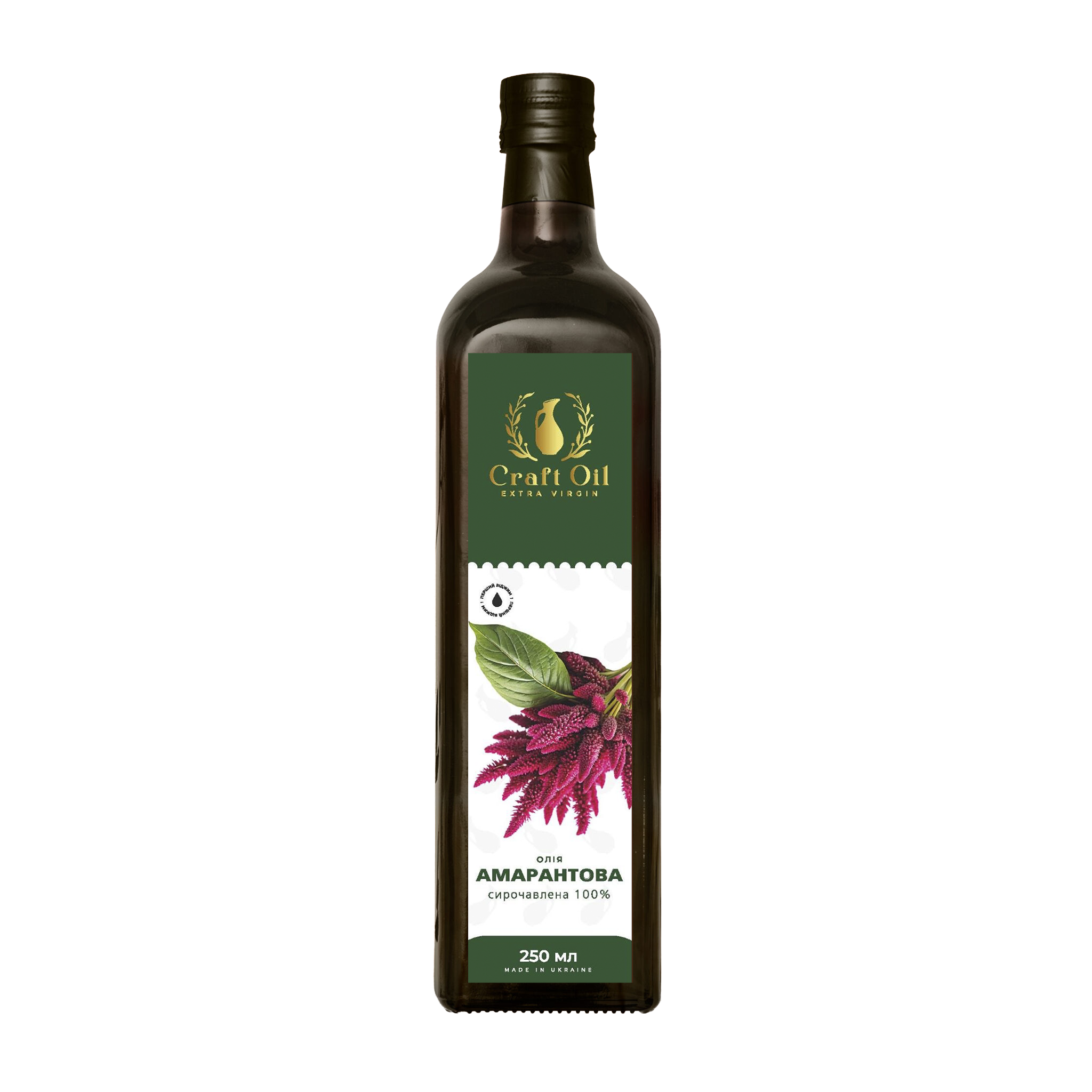
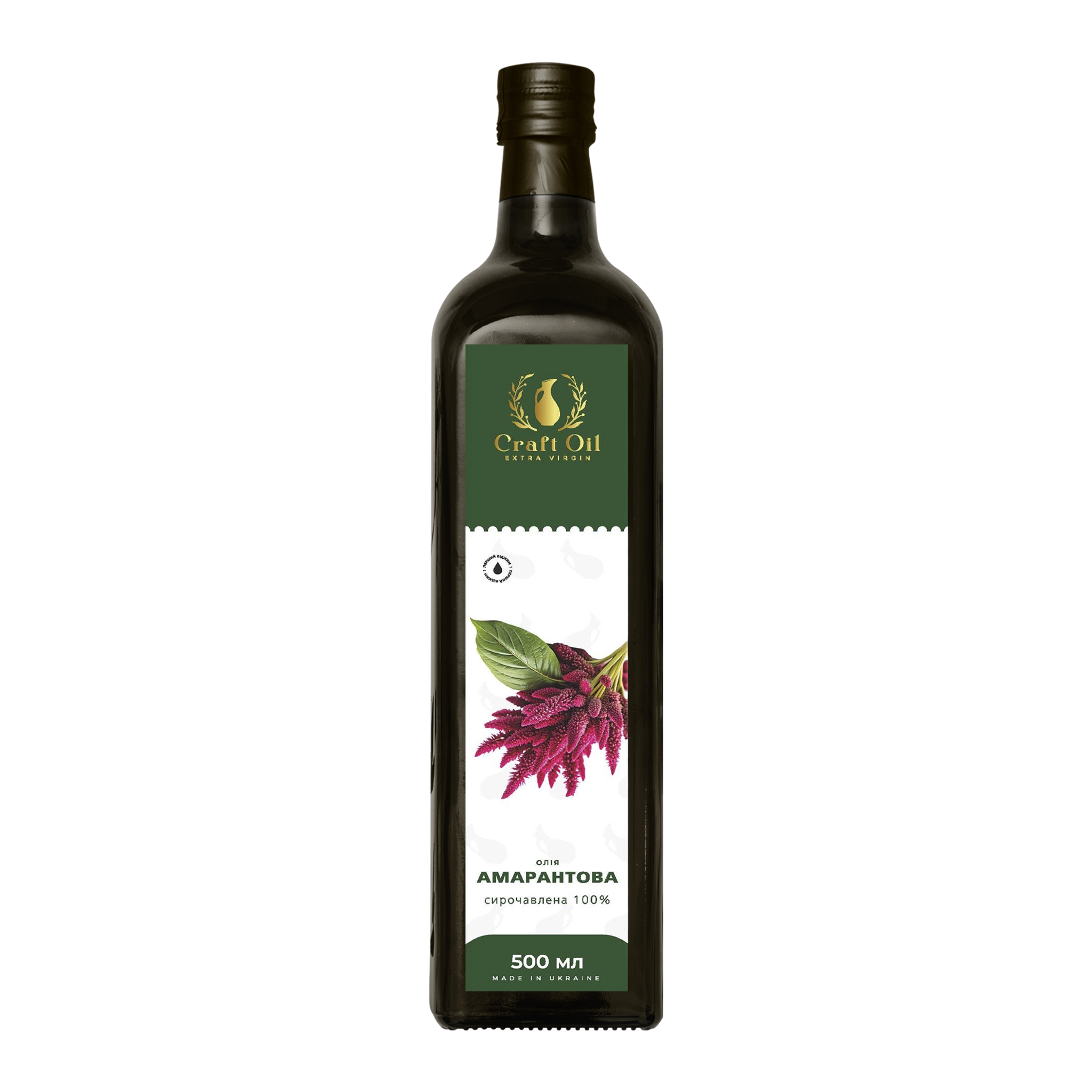
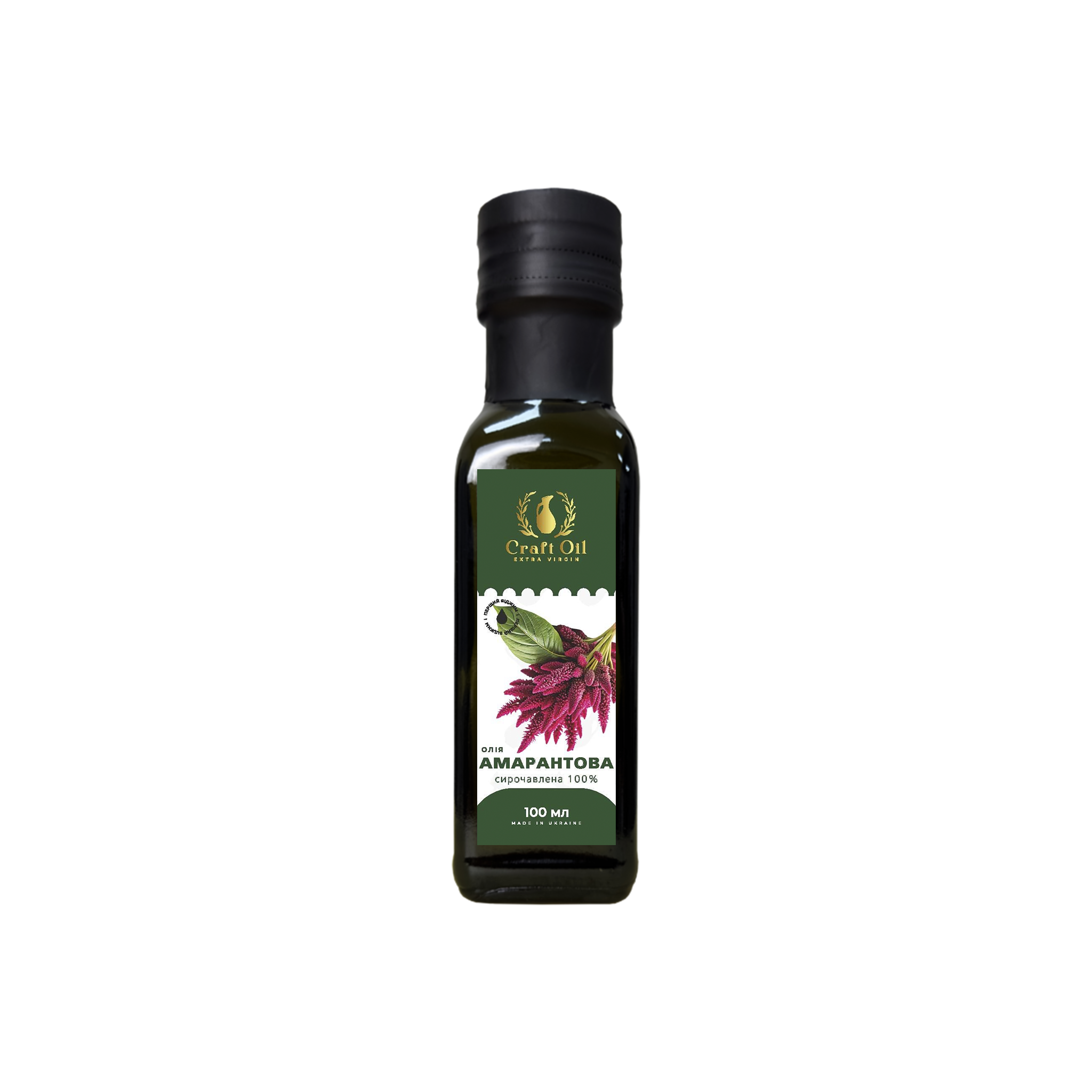
Cold-Pressed Amaranth Seed Oil
11,00 €
In stock
Delivery
- Delivery time: 1 to 3 business days, depending on the region..
- Delivery methods:
Nova Poshta
- To a Nova Poshta branch
- Courier delivery to the address
Ukrposhta
- To a Ukrposhta branch
- Courier delivery to the address
- Cost: according to the carrier's rates.
Self-pickup from the company CraftOil
How self-pickup works:
- Self-pickup is available from the CraftOil warehouse or office at the following address: 21 Kosmicheskaya St., Kharkiv.
- The warehouse/office address is confirmed individually when placing the order.
- For certain products, pickup from third-party partner warehouses can be arranged (subject to agreement).
FREE DELIVERY ACROSS UKRAINE
Order 2,500 UAH or more and get free delivery!
The offer applies to the order:
- cold-pressed oil;
- flour;
- spices.
Payment methods:
-
«Nova Poshta Cash on Delivery».
Payment for the goods upon receipt at the transport company's branch.
Nova Poshta's cash-on-delivery fee is 2% of the COD amount plus 20 UAH.
-
«Ukrposhta Cash on Delivery».
Payment for the goods upon receipt at the transport company's branch.
-
«To the bank account, using the payment details».
Payment details:
Recipient's account in IBAN format:
UA233510050000026007878953477
Recipient code, EDRPOU: 2899116355
Mamaev Oleksiy Sergeyovich
- «Payment by Visa or Mastercard – on the website».
Description
CraftOil Amaranth Oil · Naturally occurring squalene · Dark glass bottles · Pressing date on the label
Discover the distinctive qualities of CraftOil Cold-Pressed Amaranth Seed Oil, a premium plant oil valued for its naturally occurring squalene, characteristic golden-amber colour and mild, nutty flavour.
Available in 100 ml, 250 ml and 500 ml bottles, amaranth oil is an interesting choice for customers looking for a speciality edible oil or a plant oil for appropriate cosmetic applications.
CraftOil produces plant oils using hydraulic cold-pressing equipment. According to our production process, amaranth oil is pressed to order, packaged in dark glass and labelled with the pressing date.
Why Is Amaranth Oil a Premium Product?
Amaranth oil is made from the seeds of amaranth, a plant cultivated for its edible seeds and other uses.
One reason this oil is relatively expensive is its low oil yield. Amaranth seeds typically contain approximately 5–8% oil, although the actual amount varies by species, variety, growing conditions and processing method.
This means that producing a litre of amaranth oil can require substantially more raw material than producing oil from high-oil-content seeds such as sunflower.
The limited oil yield, specialised processing and characteristics of the finished product all contribute to the cost of amaranth seed oil.
Colour, Aroma and Texture
High-quality amaranth oil typically has a golden to amber appearance, a smooth texture and a mild, characteristic flavour that may be described as nutty or slightly grassy.
Its precise colour, aroma and composition depend on the amaranth variety, seed quality, processing conditions and storage.
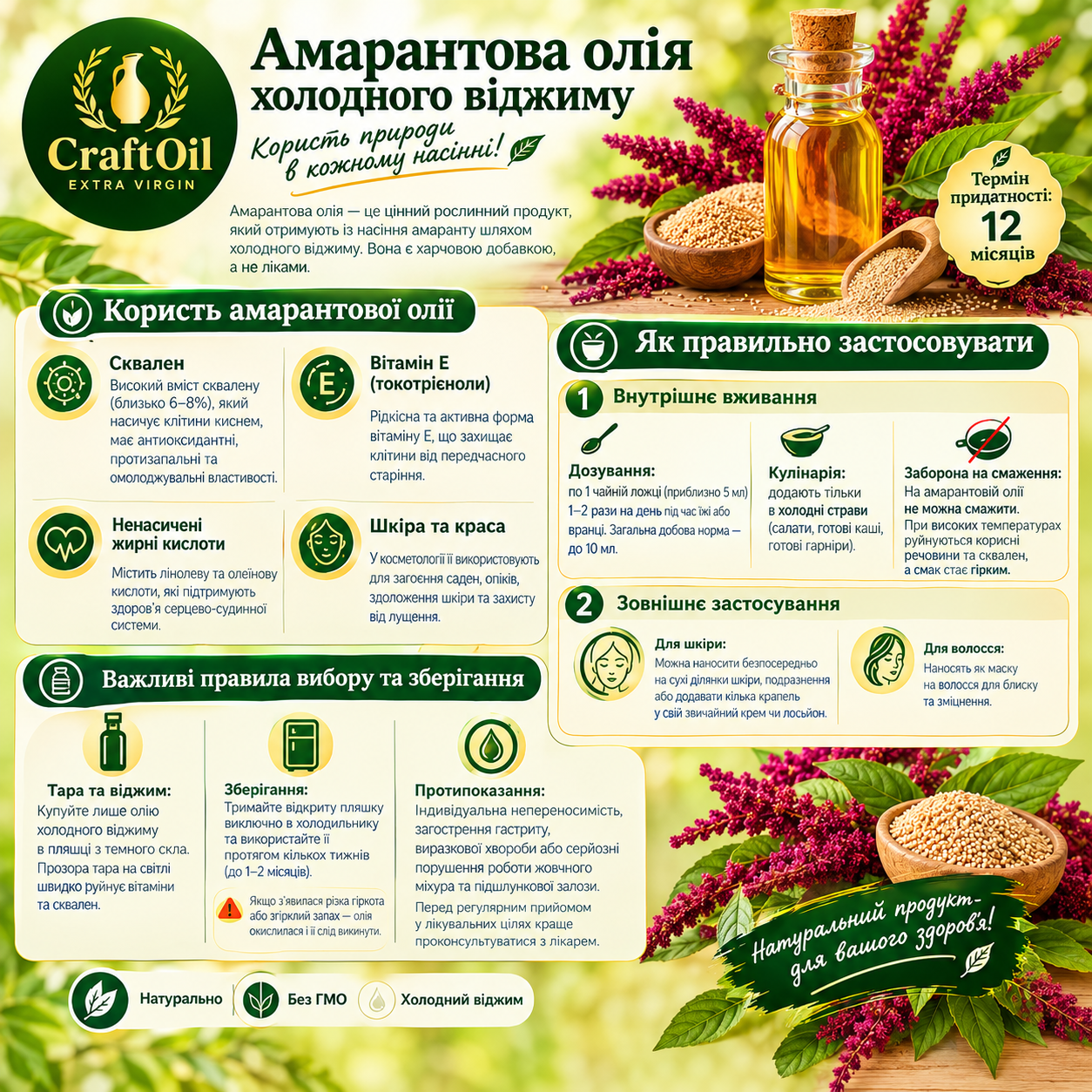
Amaranth oil is particularly interesting because of its naturally occurring squalene, a lipid compound also found in human skin surface lipids.
What Makes Amaranth Oil Special? Naturally Occurring Squalene
Squalene is one of the characteristic components of amaranth seed oil and an important reason for the oil’s interest in food science and cosmetic formulation.
Squalene occurs naturally in human sebum and is also found in certain plant oils and other natural sources. It is widely used in cosmetic formulations, including skin moisturisers and emollient products.
Amaranth seed oil is recognised as a relatively rich plant source of squalene. Published research reports substantial variation in its concentration depending on the amaranth variety and extraction method.
Some studies report squalene levels in the approximate range of 5–8% in amaranth oil, but these values should not be treated as a guaranteed specification for every product or batch.
|
Oil |
General characteristics |
|
Amaranth seed oil |
Can contain comparatively high levels of squalene |
|
Olive oil |
Usually contains lower amounts of squalene, with substantial variation |
|
Other plant oils |
Squalene levels vary by oil type and processing |
These comparisons are indicative rather than a laboratory comparison of specific products.
Why does squalene matter?
Squalene is of interest in cosmetic science because of its compatibility with the lipid components of the skin’s surface. It can be used as an emollient ingredient in suitable cosmetic formulations.
The presence of squalene does not, by itself, prove that an oil treats skin conditions or provides a particular medical benefit. The effects of a finished cosmetic product depend on its overall formulation and intended use.
How to check the quality of amaranth oil
Because amaranth oil is a relatively expensive speciality oil, buyers may reasonably want to understand its origin, composition and authenticity.
Useful quality information includes:
-
The botanical source and origin of the raw material.
-
The oil extraction method.
-
Batch identification and traceability.
-
A fatty acid profile and relevant laboratory results.
-
Squalene content, if a specific value is claimed.
-
Appropriate quality documentation for food or cosmetic use.
Colour and aroma alone cannot establish the purity or authenticity of amaranth oil.
CraftOil focuses on traceable production, clear product information and batch quality checks. Where available, supporting documentation can help buyers evaluate the product more reliably than appearance alone.
Amaranth oil composition
Amaranth oil contains a mixture of fatty acids and other naturally occurring lipid compounds. The exact composition depends on the seed variety, cultivation conditions, extraction process and storage.
The following values are indicative ranges reported in the literature, not a certified analysis of an individual CraftOil batch.
|
Component |
Approximate proportion |
|
Linoleic acid (omega-6) |
42–55% |
|
Oleic acid (omega-9) |
20–25% |
|
Palmitic acid |
Around 20% |
|
Alpha-linolenic acid (omega-3) |
Usually a small proportion, around 1% in some profiles |
|
Squalene |
Approximately 5–8% in some reported samples |
Other minor components may include tocopherols, phytosterols and phospholipids. Their concentrations vary and should not be assumed without product-specific analytical data.
An important distinction: amaranth oil is generally a source of omega-6 fatty acids, not a rich source of omega-3. If you are specifically looking for alpha-linolenic acid (ALA), flaxseed, camelina and hemp seed oils are alternatives worth considering.
What Does Research Say About Amaranth Oil?
Amaranth oil has attracted scientific interest because of its lipid composition, particularly its squalene content and unsaturated fatty acids.
However, it is important to distinguish laboratory findings, preliminary research and established clinical evidence.
Human Research
A clinical study published in Lipids in Health and Disease in 2007 investigated amaranth oil in people with coronary heart disease and hypertension. The study reported improvements in certain lipid-profile measurements among participants receiving the oil.
This study is a reason for further scientific interest, but one study does not establish amaranth oil as a treatment for cardiovascular disease or prove that the same effects will occur in all consumers.
A 2025 review of amaranth research also highlights the need for additional well-designed studies before firm conclusions can be drawn about many proposed health effects.
What Does This Mean for Consumers?
-
Amaranth oil can be selected for its flavour, composition and culinary versatility.
-
Its naturally occurring squalene makes it an interesting subject in food and cosmetic research.
-
Evidence is insufficient to recommend it as a treatment for high cholesterol, cardiovascular disease, diabetes, cancer or digestive disorders.
-
It should not replace prescribed medication or professional medical care.
CraftOil does not present amaranth oil as a medicine or promise that it will prevent or cure disease.
How to Use Amaranth Oil in Food
Amaranth oil has a distinctive flavour and is best used in dishes where its character can be appreciated.
1. Add to Salads
Drizzle a small amount over green salads, tomato salads or roasted vegetable salads. It can also be combined with lemon juice, herbs and other ingredients to make a dressing.
2. Add to Ready-to-Eat Dishes
Try amaranth oil with cooked vegetables, grains, hummus, cottage cheese or vegetable purées. Add it after cooking rather than using it as the main frying oil.
3. Finish Soups and Vegetable Dishes
A small amount can be added to pumpkin soup, vegetable cream soups or other warm dishes immediately before serving.
4. Blend with Other Oils
If you prefer a milder flavour or want to distribute a small quantity across a larger dish, mix amaranth oil with another edible oil that suits your recipe.
How Much Amaranth Oil Should You Use?
There is no universally established therapeutic daily dose of amaranth oil for the general population.
For culinary use, start with a small quantity according to your taste and dietary needs. Like other oils, it is energy-dense and should be included as part of a balanced diet.
Should Amaranth Oil Be Heated?
For this premium cold-pressed oil, adding it to ready-to-eat dishes is a practical way to preserve its characteristic flavour and avoid unnecessary high-temperature exposure.
The stability of amaranth oil depends on its composition, processing and storage. Avoid assuming that cold-pressed oil is suitable for prolonged high-temperature cooking without product-specific evidence.
Amaranth Oil for Skin and Hair Care
Amaranth seed oil is also of interest for personal care because of its lipid composition and naturally occurring squalene.
Use only a product whose intended use and quality documentation are appropriate for topical application.
Facial Care
If the product is suitable for cosmetic use, apply a small amount to clean skin and assess how it feels. You may use it alone or as directed within a compatible skincare routine.
The oil may help soften dry skin by forming an emollient layer that reduces moisture loss. Individual results vary.
Care for Dry Skin
A small amount can be applied to dry areas of the body, such as hands, elbows and other areas that benefit from an oil-based emollient.
Lips and Cuticles
An oil formulated and labelled for the intended application may help soften dry cuticles and rough skin around the nails. For lip care, use only a product suitable for that purpose.
Hair Care
Some people use plant oils as a pre-wash treatment on the lengths and ends of their hair. Start with a small amount, leave it on for a limited period and wash thoroughly.
The suitability of amaranth oil depends on hair type, the product’s intended use and individual preference.
Adding Amaranth Oil to Homemade Cosmetics
Amaranth oil may be used as an ingredient in appropriately formulated cosmetic products. The suitable concentration depends on the intended product, stability, compatibility and safety assessment.
Do not assume that a particular percentage is suitable for every cream or serum. Cosmetic formulation requires attention to the complete ingredient system, preservation and product stability.
Patch test before first use. Apply a small amount to a limited area of skin and observe for a reaction. Discontinue use if redness, itching or irritation occurs. Seek professional advice if you have a known skin condition or allergy.
CraftOil Production and Quality
At CraftOil, we focus on the practical details that help customers understand the product they are buying.
Hydraulic Cold-Pressing
Our production uses hydraulic presses designed for cold-pressing plant oils. The process is intended to minimise unnecessary heat exposure.
Actual extraction temperatures depend on the equipment, raw material and operating conditions. The term cold-pressed should be understood in accordance with the applicable product specification and relevant market requirements.
Pressed to Order
CraftOil’s production process is organised around pressing to order. The pressing date is shown on the product label so customers can identify when the oil was produced.
Dark Glass Packaging
Amaranth oil is supplied in dark glass bottles. This packaging helps reduce exposure to light compared with clear packaging, although it does not eliminate oxidation.
Batch Quality Checks
Appropriate quality checks may include sensory assessment, acid value, peroxide value, fatty acid composition and other analyses relevant to the product specification.
Specific analytical results and squalene concentrations should be confirmed against the documentation for the relevant batch.
Our Approach
We aim to provide clear information about production, storage and intended use. We avoid unsupported medical claims and encourage customers to assess speciality oils based on their actual characteristics and documentation.
Who Should Use Amaranth Oil with Caution?
Amaranth oil is a concentrated food fat and may not be suitable for every person or every application.
-
Allergy: Avoid the product if you have a known allergy to amaranth or any declared ingredient.
-
Gallbladder or pancreatic conditions: High-fat foods may be unsuitable for some people with these conditions. Follow advice from your healthcare professional.
-
Pregnancy and breastfeeding: There is limited evidence about the safety of regular supplemental or unusually high intake. Discuss these uses with a healthcare professional.
-
Medication and dietary management: If you have a medical condition or follow a prescribed diet, seek individual advice before making significant dietary changes.
For cosmetic use, check that the product is intended for topical application and discontinue use if irritation occurs.
How to Store Amaranth Oil
Amaranth oil contains unsaturated fatty acids, so careful storage is important.
-
Keep the bottle tightly closed.
-
Protect it from direct sunlight and unnecessary heat.
-
Follow the storage instructions printed on the label.
-
After opening, refrigeration may help preserve quality if consistent with the product instructions.
-
Use the oil within the recommended period after opening and do not exceed the labelled best-before date.
Oxidative stability varies with the oil’s composition, processing and storage conditions. A dark glass bottle helps protect the oil from light but does not stop oxidation entirely.
A distinctly rancid smell, unusual bitterness or other clear signs of deterioration may indicate that the oil should not be consumed.
Frequently Asked Questions About Amaranth Oil
Why is amaranth oil expensive?
Amaranth seeds generally have a relatively low oil content, often around 5–8%. Producing the same volume of oil can therefore require considerably more raw material than processing seeds with a higher oil yield.
What is squalene in amaranth oil?
Squalene is a naturally occurring lipid compound found in amaranth oil and certain other natural sources. It is also used in cosmetic formulations. The concentration in amaranth oil varies by variety and processing method.
Is amaranth oil rich in omega-3?
No. Amaranth oil is generally richer in linoleic acid, an omega-6 fatty acid. Flaxseed, camelina and hemp seed oils are alternatives for people specifically seeking alpha-linolenic acid (omega-3).
Can amaranth oil treat high cholesterol?
It should not be used as a treatment for high cholesterol. Some preliminary human research has reported changes in lipid measurements, but the evidence is not sufficient to establish amaranth oil as a medical treatment.
Can I fry with amaranth oil?
For a premium cold-pressed oil, we recommend using it in ready-to-eat dishes rather than prolonged high-temperature cooking. Follow the product’s technical guidance for its intended use.
Can I apply amaranth oil to my face?
If the product is suitable for cosmetic use, a small amount may be applied to assess skin compatibility. Patch-test first and discontinue use if irritation occurs.
How can I check whether amaranth oil is authentic?
Colour and aroma are not enough to confirm authenticity. Ask for traceability information, the extraction method and relevant batch documentation. Where squalene content is claimed, request appropriate analytical evidence.
Which bottle size should I choose?
-
100 ml: A practical option for trying a speciality oil or using it in small quantities.
-
250 ml: A middle-size option for regular culinary or other appropriate use.
-
500 ml: A larger format for customers who use the oil more frequently.
Choose a size that suits your consumption rate and the recommended storage period after opening.
Buy Cold-Pressed Amaranth Oil from CraftOil
Explore CraftOil Amaranth Seed Oil in 100 ml, 250 ml and 500 ml dark glass bottles.
CraftOil produces plant oils using hydraulic pressing equipment and provides product information designed to help customers understand the oil’s characteristics, intended uses and storage requirements.
Why choose CraftOil?
-
Hydraulic cold-pressing production.
-
Pressing date indicated on the label.
-
Dark glass packaging.
-
Clear information about the oil’s composition and use.
-
Quality checks appropriate to the product and batch.
-
Delivery options within Ukraine and international shipping where available.
Check the current price, available bottle sizes, payment methods and shipping destinations on the CraftOil website.
Choose amaranth oil for its distinctive flavour and naturally occurring squalene, and use it in ways appropriate to its intended purpose.
Scientific References
-
Martirosyan D.M., Miroshnichenko L.A., Kulakova S.N., Pogojeva A.V., Zoloedov V.I. “Amaranth oil application for coronary heart disease and hypertension.” Lipids in Health and Disease. 2007;6:1. DOI: 10.1186/1476-511X-6-1.
-
“Amaranth (Amaranthus caudatus L.): Nutritional Composition, Bioactive Compounds, Processing Technologies, Food Applications, and Future Perspectives.” Molecules. 2025. DOI: 10.3390/molecules31172960.
-
“Amaranth Seed Oil Composition.” IntechOpen, 2020. https://www.intechopen.com/chapters/71167.
-
“Amaranth Oilseed Composition and Cosmetic Applications.” Separations. 2022;9(7):181. DOI: 10.3390/separations9070181.


Reviews
There are no reviews yet.