


 +38 068 277 99 23


Craft Oil is delicious and healthy high-quality cold-pressed oils created with love and care.
[...]

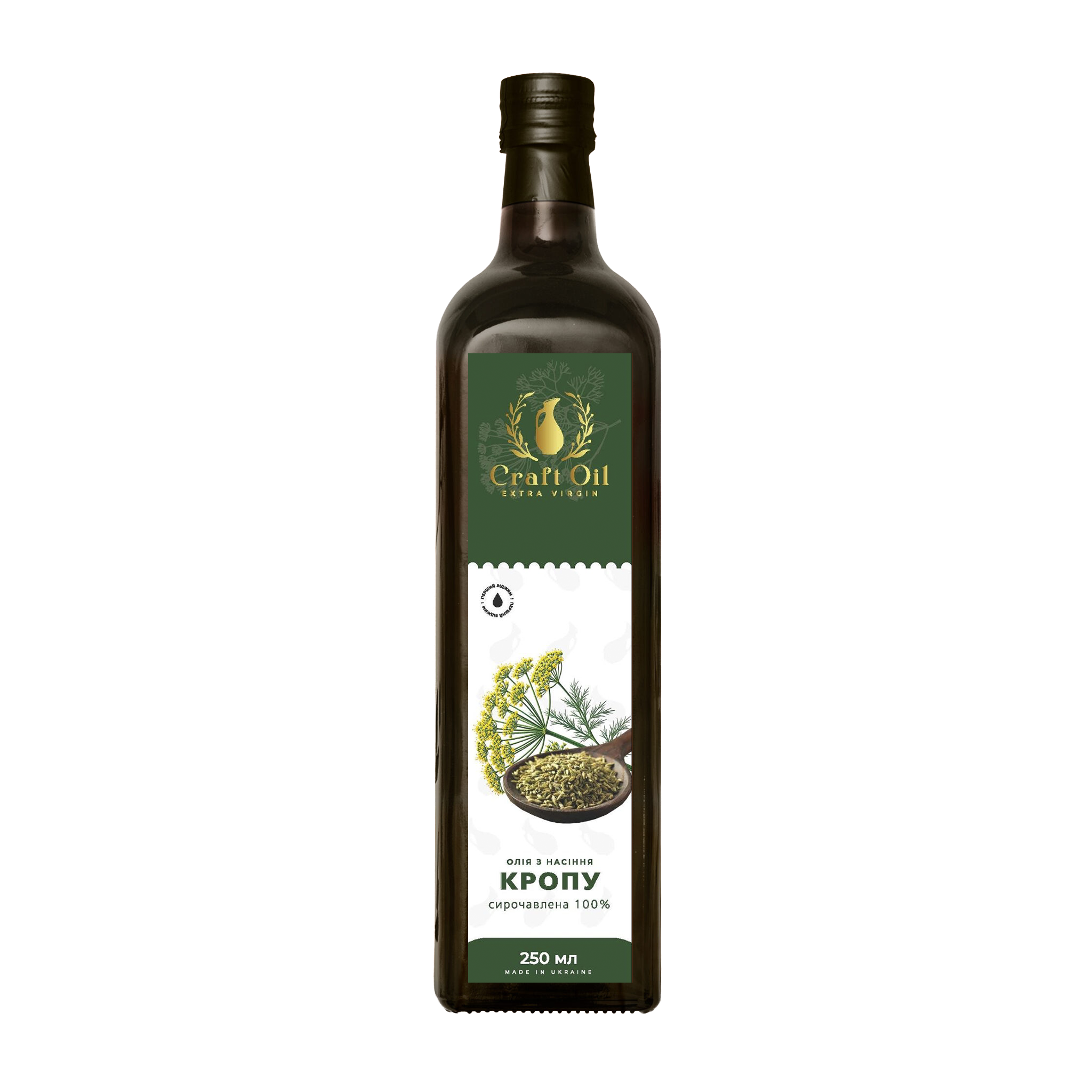
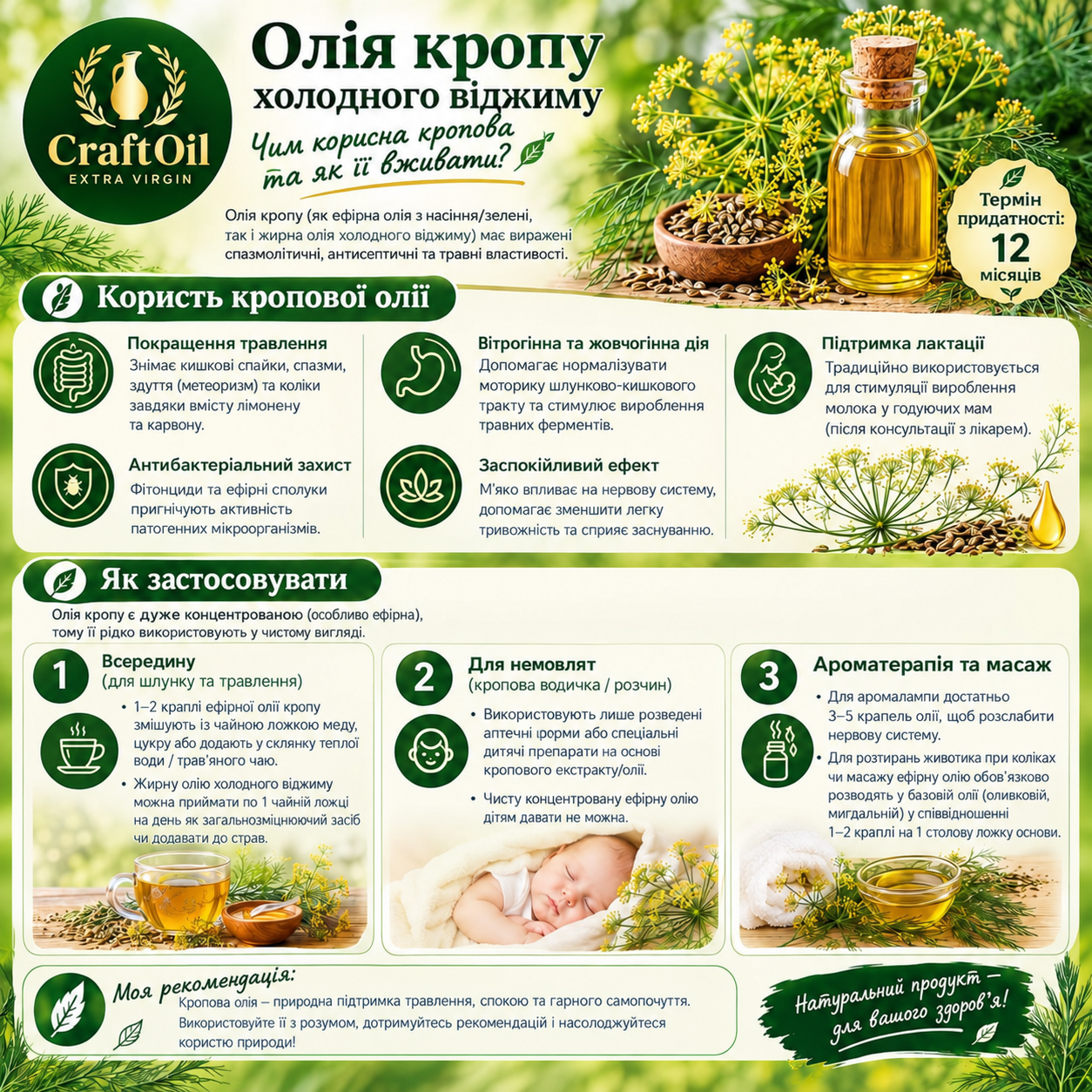
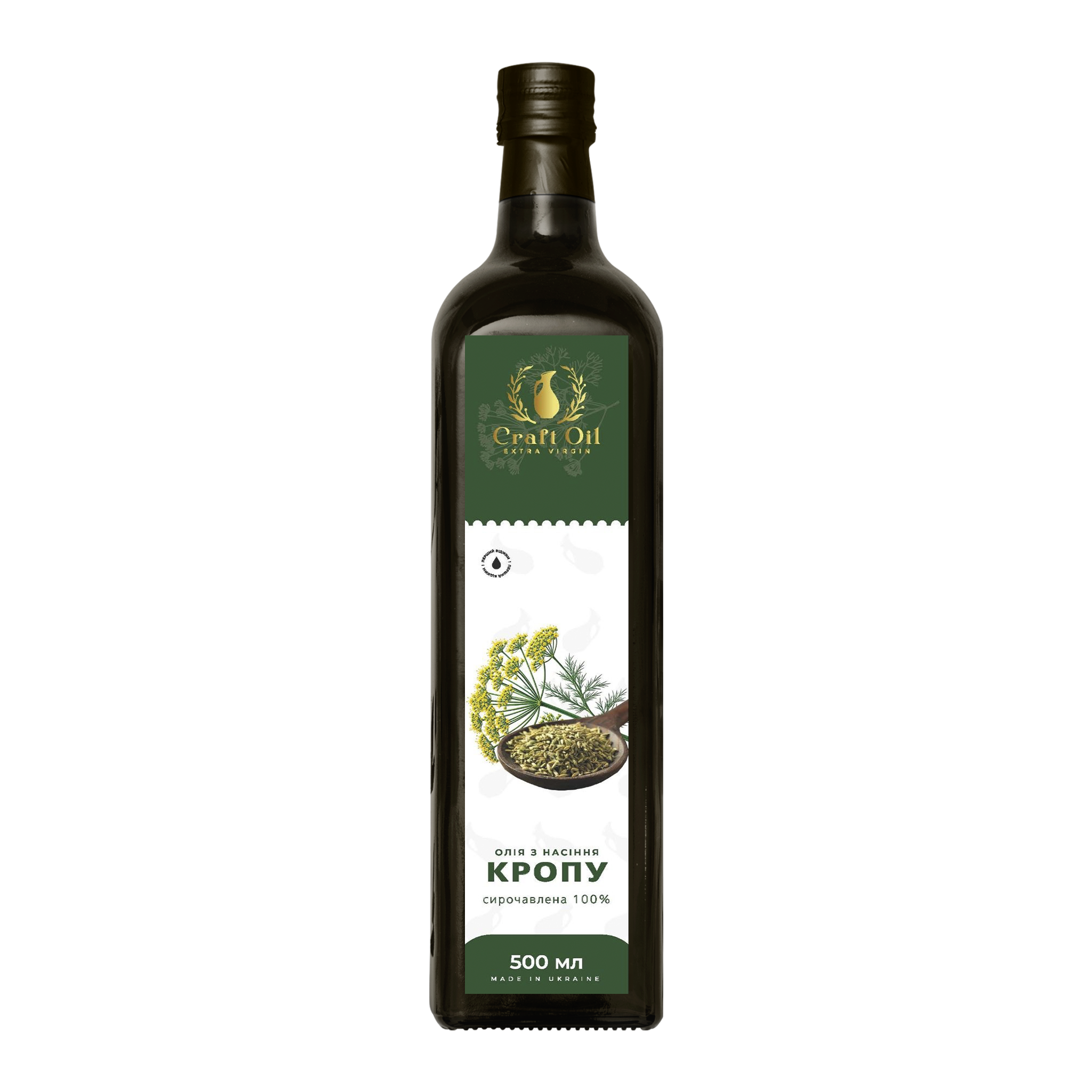
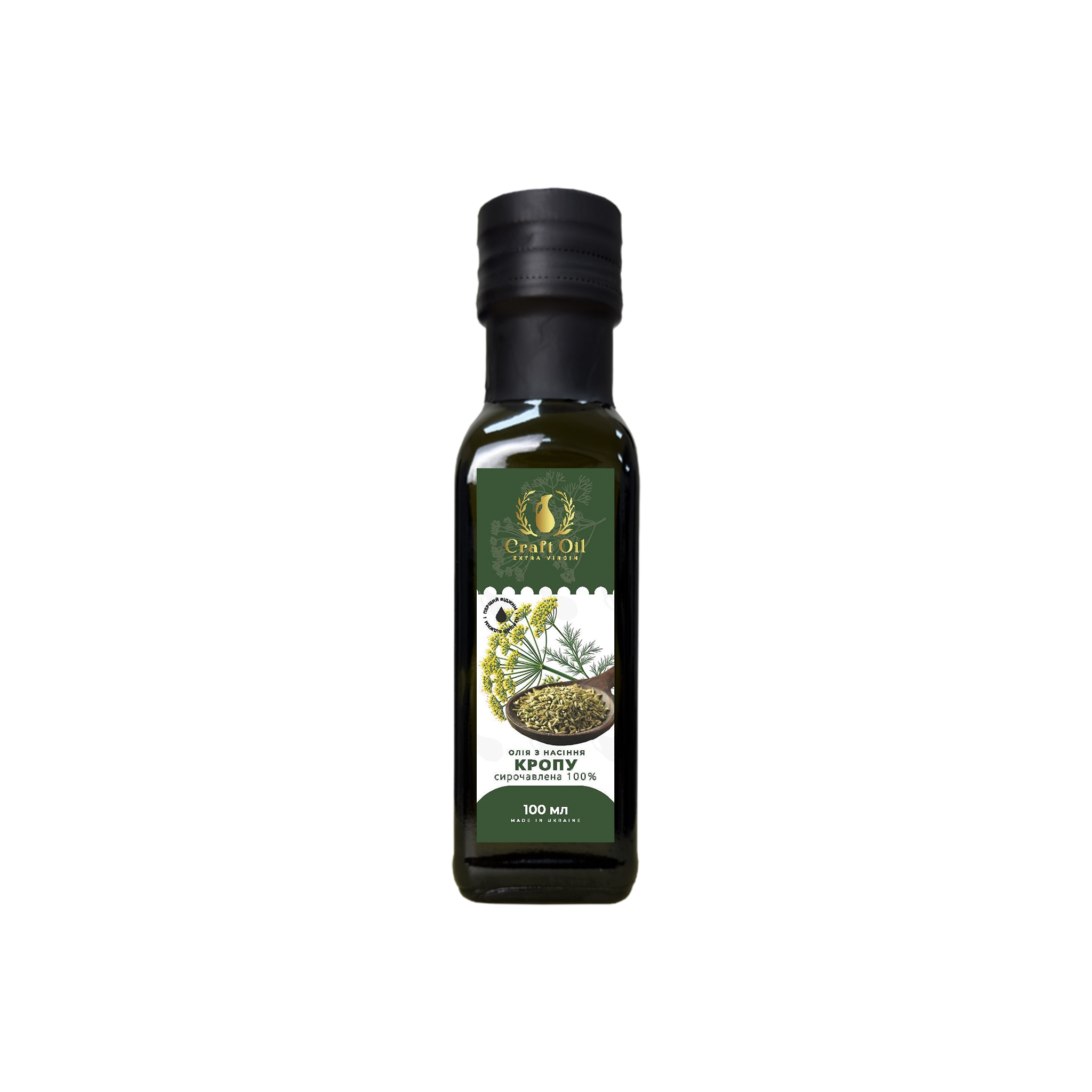
Cold-pressed dill seed oil
15,00 €
In stock
Delivery
- Delivery time: 1 to 3 business days, depending on the region..
- Delivery methods:
Nova Poshta
- To a Nova Poshta branch
- Courier delivery to the address
Ukrposhta
- To a Ukrposhta branch
- Courier delivery to the address
- Cost: according to the carrier's rates.
Self-pickup from the company CraftOil
How self-pickup works:
- Self-pickup is available from the CraftOil warehouse or office at the following address: 21 Kosmicheskaya St., Kharkiv.
- The warehouse/office address is confirmed individually when placing the order.
- For certain products, pickup from third-party partner warehouses can be arranged (subject to agreement).
FREE DELIVERY ACROSS UKRAINE
Order 2,500 UAH or more and get free delivery!
The offer applies to the order:
- cold-pressed oil;
- flour;
- spices.
Payment methods:
-
«Nova Poshta Cash on Delivery».
Payment for the goods upon receipt at the transport company's branch.
Nova Poshta's cash-on-delivery fee is 2% of the COD amount plus 20 UAH.
-
«Ukrposhta Cash on Delivery».
Payment for the goods upon receipt at the transport company's branch.
-
«To the bank account, using the payment details».
Payment details:
Recipient's account in IBAN format:
UA233510050000026007878953477
Recipient code, EDRPOU: 2899116355
Mamaev Oleksiy Sergeyovich
- «Payment by Visa or Mastercard – on the website».
Description
Cold-pressed dill seed oil
CraftOil Dill Seed Oil · Cold-pressed from dill seeds · Distinctive herbal aroma · Pressing date on the label
Discover the distinctive flavour of CraftOil Cold-Pressed Dill Seed Oil, a speciality edible oil made from the seeds of dill (Anethum graveolens).
With its characteristic herbal, warm and slightly caraway-like aroma, dill seed oil adds a distinctive touch to fish, potatoes, grilled vegetables, salad dressings and homemade sauces. A few drops can make a noticeable difference to a finished dish.
CraftOil produces plant oils using hydraulic pressing equipment. Our dill seed oil is pressed to order, packaged in dark glass and labelled with its pressing date.
Important: This product is a fixed vegetable oil obtained by pressing dill seeds. It is not dill essential oil, which is a concentrated mixture of volatile aromatic compounds obtained through distillation.
What Is Dill Seed Oil?
Dill seed oil is a speciality plant oil made from the seeds of Anethum graveolens, the familiar culinary herb used in many European and international cuisines.
The seeds contain a relatively small proportion of fixed oil compared with high-oil-content crops such as sunflower. This contributes to the specialised nature and production cost of dill seed oil.
Our cold-pressed product is intended for culinary use. It has a rich, distinctive herbal aroma and is best used in small quantities as a finishing oil or flavouring ingredient.
Unlike neutral cooking oils, dill seed oil is chosen primarily for its characteristic aroma and flavour.
Dill Seed Oil vs Dill Essential Oil: What Is the Difference?
The terms dill oil and dill seed oil can refer to different products. Understanding the distinction is important when purchasing an oil for cooking.
|
Feature |
CraftOil fixed dill seed oil |
Dill essential oil |
|
Production method |
Mechanical pressing of seeds |
Usually steam distillation |
|
Main components |
Fixed oils, including fatty acids |
Concentrated volatile aromatic compounds |
|
Texture |
Oily, similar to other vegetable oils |
Usually a concentrated aromatic liquid |
|
Typical purpose |
Culinary use, if labelled for food |
Aromatic, industrial or other specifically authorised uses |
|
How to use |
In small culinary quantities according to product instructions |
Only as directed for the specific product; never assume it is suitable for ingestion |
These products have different compositions and safety requirements.
CraftOil’s product is a fixed edible oil, not an essential oil. Do not substitute an essential oil for a culinary oil or assume that all products labelled “dill oil” are interchangeable.
Dill Seed Oil Composition
The composition of dill seed oil varies depending on the seed variety, growing conditions, extraction method and storage.
Research on fixed dill seed oils has identified fatty acids such as petroselinic acid, oleic acid, linoleic acid and palmitic acid. The relative proportions can vary substantially between samples.
|
Component |
General characteristics |
|
Petroselinic acid |
A characteristic fatty acid found in oils from several plants in the Apiaceae family |
|
Oleic acid |
A monounsaturated fatty acid |
|
Linoleic acid |
An omega-6 polyunsaturated fatty acid |
|
Palmitic acid |
A saturated fatty acid |
|
Tocopherols |
Compounds belonging to the vitamin E family; amounts vary |
|
Volatile aromatic compounds |
May contribute to the characteristic aroma, depending on the product and processing |
Exact percentages should be confirmed using a laboratory analysis of the actual CraftOil product. Figures from individual research studies should not be treated as guaranteed values for every batch.
What Is Petroselinic Acid?
Petroselinic acid is a monounsaturated fatty acid associated with several seed oils from the Apiaceae family, which includes dill, coriander, fennel and parsley.
Its presence makes the fatty acid composition of dill seed oil particularly interesting from a food science perspective.
For buyers, the most practical distinction is that dill seed oil is a speciality fixed oil with a characteristic composition and aroma, rather than simply another neutral vegetable oil.
What Does Research Say About Dill Seed Oil?
Dill seeds have a long history of culinary use. They are also discussed in traditional herbal practices.
However, research findings need to be interpreted carefully. Many studies involving dill focus on essential oils, isolated compounds or laboratory experiments rather than human clinical trials of fixed dill seed oil.
These products have different compositions, so results from studies of dill essential oil cannot automatically be applied to cold-pressed dill seed oil.
CraftOil presents this product as a speciality culinary oil and does not claim that it treats digestive disorders, lowers blood pressure or cures disease.
Dill seed oil is a food product, not a medicine, and should not replace medical care or prescribed treatment.
How to Use Dill Seed Oil in Cooking
Dill seed oil is best treated as a flavouring oil rather than the main oil in your everyday diet. Its aroma can be pronounced, so start with a small quantity and adjust to taste.
1. Fish and Seafood
Add a few drops to baked fish, pan-cooked fish or seafood immediately before serving. Its herbal aroma pairs well with lemon, fresh herbs and simple seasoning.
2. Potatoes
Try a small amount with boiled new potatoes, roasted potatoes or mashed potatoes. Combine with salt and fresh herbs for a distinctive finishing flavour.
3. Grilled Vegetables
Dill seed oil can add an aromatic touch to grilled courgettes, aubergines, peppers and other vegetables.
For best flavour, add it after cooking rather than exposing it to prolonged heat.
4. Salad Dressings and Sauces
Mix a small amount into a yoghurt-based or sour-cream-style sauce, a cucumber dressing or a vinaigrette.
For a milder result, blend it with a neutral edible oil before adding it to the dish.
5. Marinades
Use a small quantity in marinades for fish or chicken, provided the product is suitable for that use. Combine with lemon juice, herbs and other ingredients according to your recipe.
6. Soups
Add a few drops to an individual bowl of vegetable soup or another suitable finished dish immediately before serving.
How Much Should You Use?
Start with a few drops per serving. The appropriate quantity depends on the intensity of the oil’s aroma and your personal preference.
For a salad dressing or a larger dish, begin with a small amount mixed into another suitable edible oil. Taste before adding more.
Should You Heat Dill Seed Oil?
For the best aromatic experience, use dill seed oil as a finishing oil. Prolonged or high-temperature heating may reduce its characteristic aroma.
Follow the product instructions and avoid assuming that a speciality cold-pressed oil is suitable for deep-frying or prolonged high-temperature cooking.
CraftOil Production and Quality
A speciality oil is best evaluated through its raw material, production method, packaging and batch documentation.
Hydraulic Cold-Pressing
CraftOil produces plant oils using hydraulic presses. The process is designed to obtain oil through mechanical pressure rather than solvent extraction.
Actual extraction temperatures depend on the raw material and operating conditions. Product-specific processing information should be assessed in accordance with the applicable definition of cold pressing.
Pressed to Order
Our production process is organised around pressing to order. The pressing date is indicated on the label so customers can identify when the oil was produced.
Dark Glass Packaging
The oil is packaged in dark glass to help limit light exposure. This is particularly useful for speciality oils whose flavour and quality can change during storage.
Dark glass does not eliminate oxidation, so proper storage and a tightly closed bottle remain important.
Raw Material and Batch Checks
The quality of dill seed oil depends on the condition of the seeds and the extraction process.
Appropriate checks may include the aroma, appearance, acid value, peroxide value and fatty acid profile. Specific laboratory results should be confirmed against the documentation for the relevant batch.
Clear Product Information
CraftOil aims to explain what the product is, how it is made and how it should be used. We distinguish fixed culinary oils from essential oils and avoid unsupported medical claims.
Who Should Use Dill Seed Oil with Caution?
Dill seed oil is a concentrated flavouring food oil and may not be suitable for everyone.
-
Pregnancy and breastfeeding: Safety information for regular or concentrated use is limited. Seek advice from a qualified healthcare professional before using it beyond ordinary culinary amounts.
-
Infants and young children: Do not use this speciality oil as a remedy for colic or give it to infants unless a qualified healthcare professional has specifically advised that the product is appropriate.
-
Allergies: People with known allergies to dill or related plants should check suitability before use. Plants in the Apiaceae family include celery, carrot, coriander, fennel and parsley.
-
Gallbladder or pancreatic conditions: Concentrated dietary fats may be unsuitable for some people with these conditions. Follow individual medical advice.
-
Medication use: If you take medication and intend to make significant dietary changes, consult a healthcare professional.
If you experience an adverse reaction, discontinue use and seek appropriate advice.
What About Dill Water for Babies?
Dill seed oil should not be confused with products sold as dill water or gripe water.
Some traditional preparations described as “dill water” use fennel (Foeniculum vulgare) rather than dill (Anethum graveolens). Formulations vary by country and manufacturer, so the ingredients should always be checked.
Neither dill seed oil nor dill essential oil should be used as an improvised remedy for infant colic. If a baby has persistent crying, feeding difficulties or other symptoms, consult a paediatric healthcare professional.
How to Store Dill Seed Oil
To help maintain the oil’s quality and aroma:
-
Keep the bottle tightly closed after every use.
-
Store it away from direct sunlight and sources of heat.
-
Follow the storage instructions and best-before date on the label.
-
Refrigerate after opening if this is recommended by the product instructions.
-
Use a clean, dry utensil to avoid introducing moisture or contaminants.
Oxidative stability depends on the oil’s fatty acid profile, natural antioxidants, processing and storage conditions.
Even if an oil remains suitable for consumption, its aroma may gradually become less pronounced. Store it carefully and use it within the recommended period after opening.
Discard the product if it develops a distinctly rancid or otherwise abnormal smell, an unusual taste or other signs of deterioration.
Frequently Asked Questions About Dill Seed Oil
What is cold-pressed dill seed oil?
It is a fixed vegetable oil obtained by mechanically pressing dill seeds. The CraftOil product is intended for culinary use, subject to its product specification and label instructions.
Is dill seed oil the same as dill essential oil?
No. Fixed dill seed oil is mainly composed of lipids, including fatty acids. Dill essential oil is a concentrated mixture of volatile aromatic compounds, generally obtained through distillation.
Can I use dill seed oil in cooking?
Yes, if the product is labelled and supplied as an edible oil. It is best used in small quantities as a finishing oil for fish, potatoes, vegetables, sauces and dressings.
Can I fry with dill seed oil?
We recommend adding it to finished dishes to preserve its characteristic aroma. It is not intended as a general-purpose frying oil unless the product specification explicitly supports that use.
Why is dill seed oil more expensive than sunflower oil?
Dill seeds generally contain a much lower proportion of fixed oil than sunflower seeds. Raw material costs, specialised processing and the relatively small production yield contribute to the price.
Can dill seed oil be used for infant colic?
No. Do not use it as a home remedy for infant colic. Consult a paediatric healthcare professional for advice about an infant’s symptoms.
How much dill seed oil should I add to food?
Start with a few drops per serving. Its flavour can be intense, so taste the dish before adding more.
How can I check the quality of dill seed oil?
Look for clear product identification, traceability, the pressing date, appropriate storage instructions and relevant batch quality documentation. Appearance and aroma alone cannot establish authenticity or laboratory quality.
Buy Cold-Pressed Dill Seed Oil from CraftOil
Discover the distinctive flavour of CraftOil Cold-Pressed Dill Seed Oil, a speciality edible oil for customers who enjoy experimenting with natural ingredients and aromatic culinary oils.
CraftOil produces plant oils using hydraulic pressing equipment and provides practical information about product characteristics, intended use and storage.
Why choose CraftOil?
-
Cold-pressed production using hydraulic equipment.
-
Pressing date indicated on the label.
-
Dark glass packaging.
-
Clear distinction between fixed edible oil and essential oil.
-
Practical recommendations for culinary use.
-
Quality checks appropriate to the product and batch.
-
Delivery options within Ukraine and international shipping where available.
Check the current price, available packaging sizes, payment options and delivery destinations on the CraftOil website.
Bring a distinctive herbal note to your favourite dishes with CraftOil dill seed oil.
References
-
“Chemical composition, oxidative stability and antiproliferative activity of Anethum graveolens (dill) seed hexane extract.” Grasas y Aceites, 2020.
-
“Chemical Composition and Bioactivity of Dill Seed (Anethum graveolens L.) Essential Oil from Plants Grown under Shading.” Available through PubMed Central: https://pmc.ncbi.nlm.nih.gov/articles/PMC10974297/
-
Commission Regulation (EU) No 432/2012, establishing a list of permitted health claims made on foods.


Reviews
There are no reviews yet.