


 +38 068 277 99 23



A honey extractor is one of the most essential tools for beekeepers. It allows honey to be gently removed from the frames while preserving the combs for reuse. However, even experienced beekeepers don’t always consider how much the design and quality of the honey extractor can influence the taste, aroma, and nutritional properties of honey.
Types of honey extractors
Today, there are three main types of honey extractors:
- Radial honey extractors – frames are placed in a circular pattern. Centrifugal force evenly removes honey from the combs. This method minimizes frame breakage and ensures the purest honey extraction;
- Tangential (or cassette) honey extractors – frames are set perpendicular to the tank walls. Honey is extracted faster, but the combs are more likely to be damaged. Wax particles and pollen can also mix with the honey;
- Combination honey extractors – Allow frame orientation to be changed. They are highly productive but usually more expensive than radial or tangential models;
How extractor performance affects honey quality
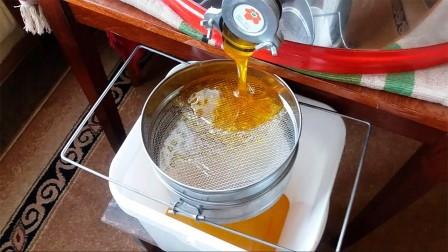
One of the key factors in honey quality is the rotation speed of the honey extractor. At low speeds, part of the honey remains in the combs, lowering yield. At very high speeds, combs may break, and the honey can foam or heat up, which negatively impacts flavor, aroma, and health benefits.
The best honey extractors gradually increase and then decrease speed. This ensures full extraction without damaging the frames or compromising honey quality.
Another important factor is the material of the extractor tank and cassettes. Stainless steel honey extractors are the best option. They are durable, do not react with honey, and preserve its natural composition and nutrients. Plastic honey extractors are more affordable and safe but less durable. Aluminum honey extractors are not recommended, as they oxidize over time, darken, and can give honey a metallic aftertaste.
The angle and stability of frame mounting also affect efficiency. Poorly fixed frames may break, releasing wax into the honey and requiring extra filtration.
When extractor design or settings are incorrect, beekeepers may face:
- Wax and comb debris in honey;
- Excessive foaming due to air saturation;
- Loss of aroma or a «cooked» taste caused by overheating;
For optimal results, electronic honey extractors are ideal. They allow beekeepers to choose programs, control time and speed, gradually build up rotation, and automatically balance the frames. Some advanced models even come with built-in filters that eliminate the need for post-extraction cleaning.
CraftOil beekeeping equipment – reliable and functional
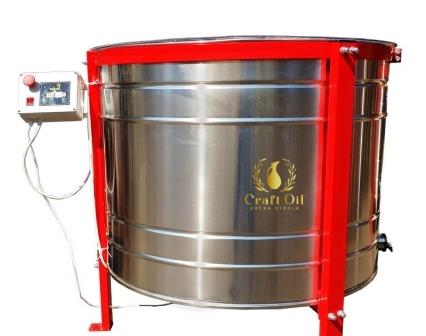
CraftOil, a manufacturer of premium cold-pressed vegetable oils, also offers a wide range of beekeeping equipment. The catalog includes not only oils and oil presses but also practical tools for beekeepers: stainless steel honey extractors (AISI-304) for small, medium, and large apiaries, honey creamer with decrystallizer, honey filters and settling tanks, uncapping tables and more
Our models such as MR-28n, MK-4 (300 mm), MK-9 (200 mm) and others are fully automated, equipped with remote controls, and can be reprogrammed for individual needs. These machines make honey harvesting simple, efficient, and enjoyable.
To learn more about the benefits of CraftOil honey extractors and to choose the best model for your apiary, submit a request on our website.


