


 +38 068 277 99 23



Even experienced beekeepers sometimes face a situation where pieces of wax get into honey. This often happens due to improper honey extraction or low-quality equipment. The simplest way to remove wax from honey is by using warm water. This method is based on the physical properties of honey and beeswax.
Cleaning honey with warm water: how it works
The separation method relies on the fact that when gently and gradually heated, beeswax melts because it has a low melting point. At the same time, water acts as a medium that allows the honey to dissolve, while the wax remains insoluble and floats to the surface due to its lower density.
At a temperature of 60–63°C (140–145°F), honey becomes more fluid and wax melts, forming a solid layer on top of the water as it cools. Simply put, warm water separates honey from wax, allowing nectar to wash out while wax particles float and solidify.
Step-by-step technique to separate wax from honey
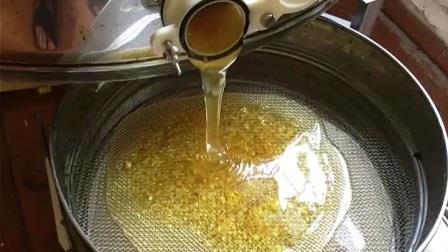
To separate honey from wax impurities, follow these steps:
- Place wax cappings (also known as zabrus) into a large pot or cauldron with a thick bottom. Add an equal amount of water;
- Heat the mixture on low heat to about 60°C;
- When the wax is completely melted, remove the pot from the heat and let it cool naturally without stirring (this can take several hours);
- As it cools, the wax will rise to the surface and harden into a thick layer.
- Once solid, carefully remove the wax cake from the pot;
In the pot, you’ll find sweet honey water below, and heavy sediment (known among beekeepers as sludge) settled at the bottom.
While simple, this method has a few downsides. Overheating honey can cause it to caramelize and lose its flavor. The wax becomes darker and less pliable, reducing its quality. A significant amount of honey is lost, as it dissolves in the water. To minimize honey loss, let the wax cappings drain for at least 24 hours before melting them.
In conclusion, separating honey and wax using warm water is an easy but not waste-free process.
A much more efficient solution is to use a special wax press machine or automatic honey extractor.
To avoid mixing wax with honey, it’s best to use a high-quality automatic honey extractor. Such equipment allows you to extract pure honey without overheating, foaming, or introducing foreign particles.
Certified beekeeping equipment from TM CraftOil
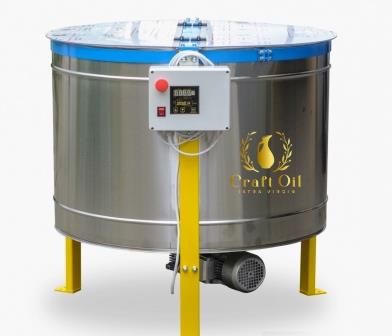
TM CraftOil — a manufacturer of 100% natural cold-pressed vegetable oils — also offers a wide range of beekeeping equipment. On our website, you’ll find a screw press machine for wax capping extraction and various models of honey extractors — small, medium, and high-power versions.
All our machines are made of food-grade stainless steel, resistant to oxidation, and preserve the natural quality of bee products.
Our radial, chordial, and mixed (combined) honey extractors are compatible with all types of frames (including homemade ones), feature multiple operating modes and fully automatic and require no manual supervision.
Check out the technical specifications of models such as MR-28n, MK9 (230), and MR-48-n — you’re sure to find the perfect extractor for your apiary.
TM CraftOil also offers durable PPU (polyurethane foam) beehives for various frame sizes. These hives are resistant to moisture, mold, and bacteria, and boast excellent thermal insulation properties.
Want to learn more about our beekeeping products or need help choosing a honey extractor? Just leave a request on our website — and our team will get in touch with you shortly.


