


 +38 068 277 99 23


Autumn is mushroom season, and it’s the perfect time not only to enjoy them fresh but also to preserve them for winter. Mushrooms can be frozen, salted, pickled, or dried. Drying is one of the best preservation methods, because dried mushrooms can be cooked just like fresh ones after soaking and they don’t require special storage conditions and take up very little space.
Almost all edible mushrooms are suitable for drying, with the exception of russulas, which taste better when salted. Before drying, mushrooms must be properly prepared, as this affects dehydration quality and shelf life.
Which mushrooms can be dried? Preparation tips
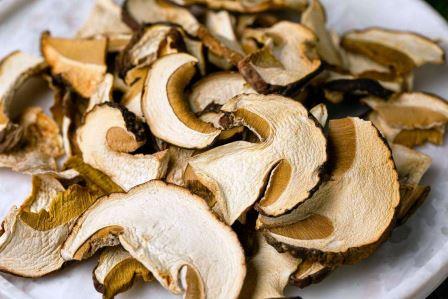
Recommendations: use only fresh mushrooms, collected no more than 24 hours ago. Sort and discard old, overripe, or worm-eaten specimens. Clean with a kitchen sponge. If mushrooms are too dirty (chanterelles, porcini, bay bolete, tricholoma), you may rinse them quickly, but they will dry longer. Remove dark scales on the stems (especially in birch and aspen boletes) with a knife or peeler. Once cleaned, slice the mushrooms into pieces no thicker than 1 cm (ideally 7–8 mm).
Drying mushrooms in a dehydrator cabinet
Drying mushrooms using a dehydrator cabinet is the easiest and most efficient method, requiring minimal effort and supervision. Place sliced mushrooms in a single layer on the tray. Set the temperature between 65–70°C (149–158°F). Set the timer for 7 hours.
The mushrooms should become dry yet slightly elastic. Test by bending a piece—if it doesn’t crack but bends with resistance, it’s ready.
On average, 1 kg of fresh mushrooms yields just over 100 g of dried product, depending on type and moisture.
Over-dried mushrooms become brittle and break into powder. Use them to make a flavorful seasoning by blending and mixing with dried herbs and spices. Porcini, bay boletes, whites — pair well with oregano, Italian herbs, and black pepper. Chanterelles and aspen boletes — go well with khmeli suneli and basil. This mushroom seasoning is perfect for soups, stews, sauces, marinades, and gravies, and complements meat, poultry, fish, and vegetables.
Automatic dehydrator cabinets by CraftOil
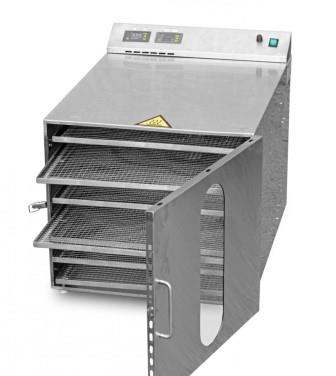
CraftOil™, a manufacturer of organic, eco-friendly vegetable oils, also produces certified dehydrator cabinets.
On our website, you’ll find models for commercial and home use, made of food-grade stainless steel, featuring an intuitive control panel and multiple functions.
Best Models for Home Use: SSh-M and SSh-M2. Compact, modern, and easy to use, these models allow you to dry mushrooms, herbs, vegetables, fruits, berries, medicinal plants, sterilize jars and lids before canning, make pastila, meringue, marshmallows, prepare yogurt, kefir, cottage cheese, hard cheese, and other delicacies.
Simply submit a request on our website, and we will contact you shortly with full details about the capabilities of our dehydrator cabinets.


