


 +38 068 277 99 23



Craft Oil is delicious and healthy high-quality cold-pressed oils created with love and care.
[...]

How to Choose a Hydraulic Power Unit: Four Questions That Make the Difference
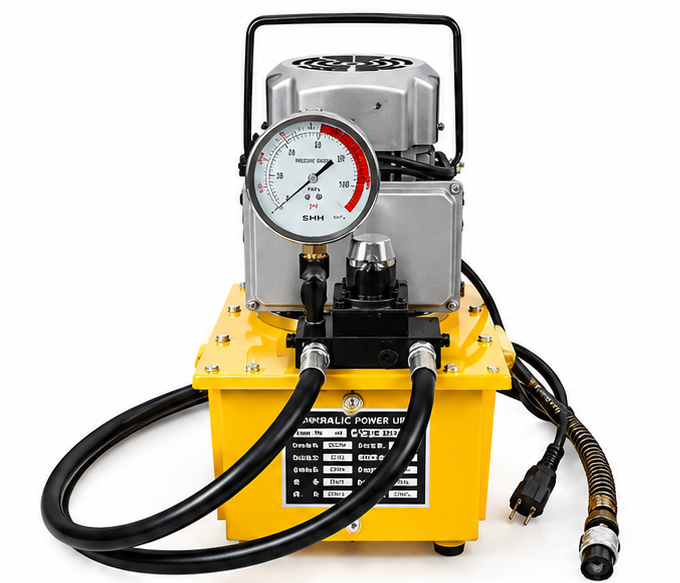
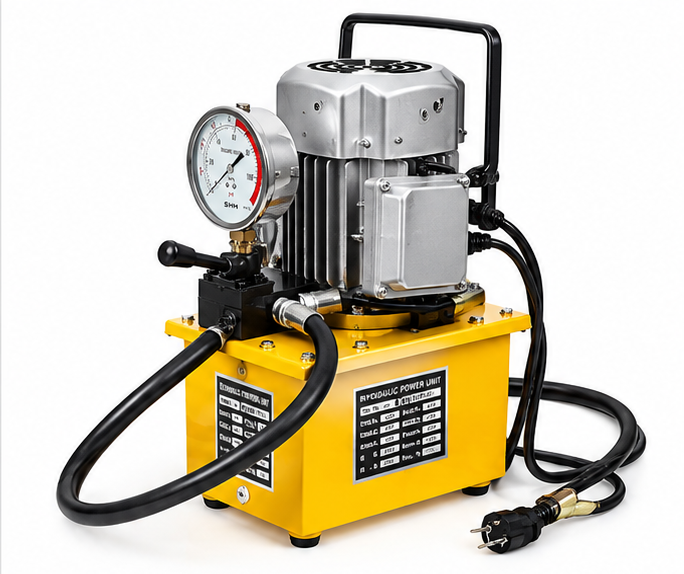
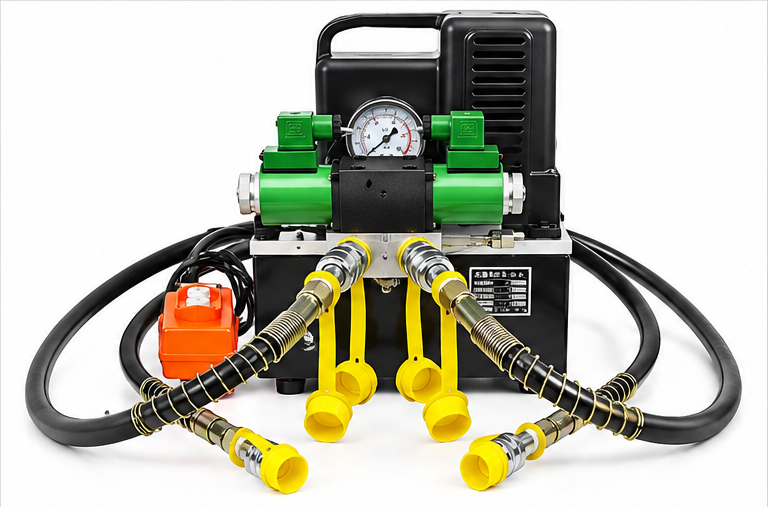
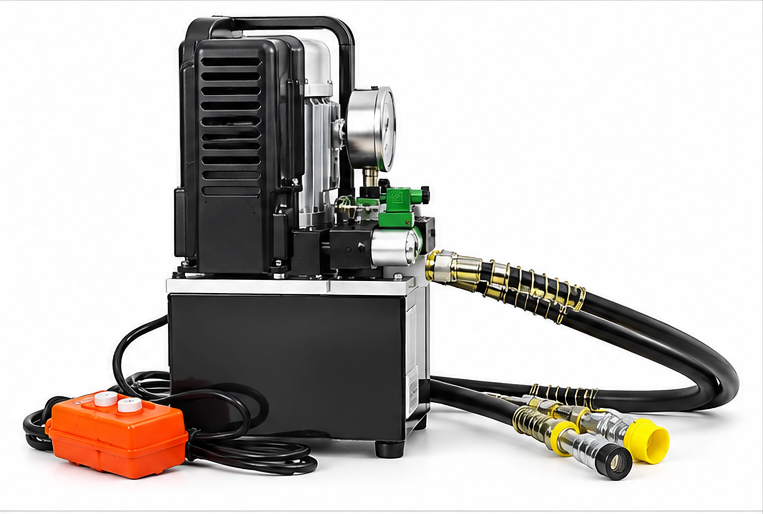
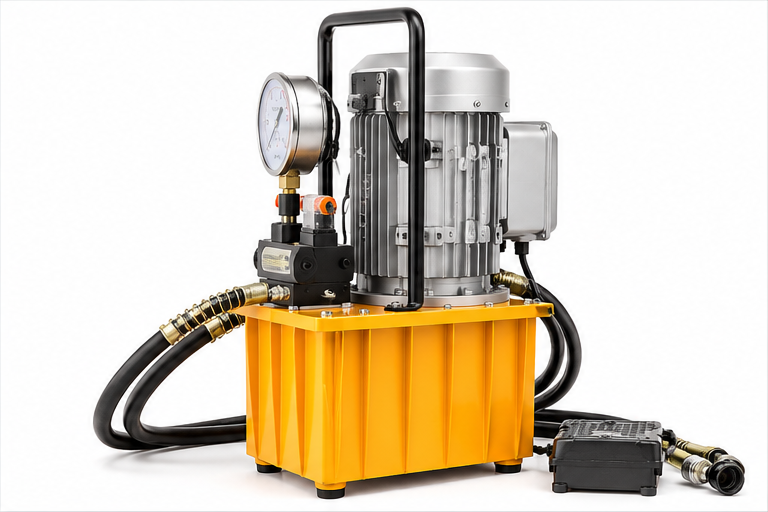
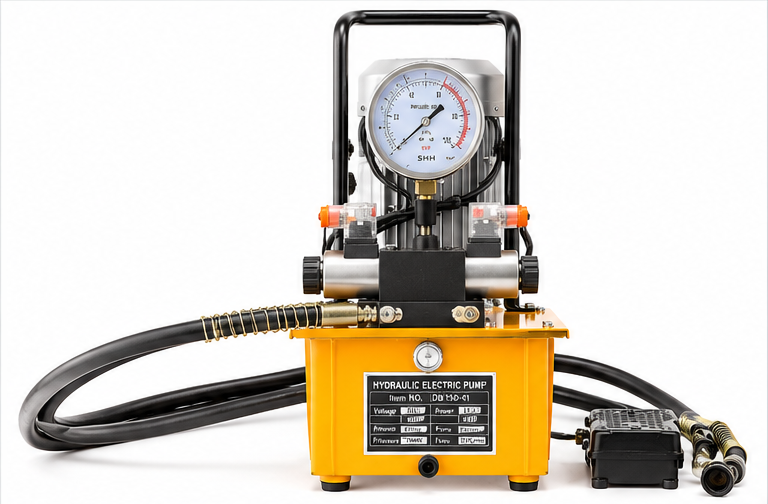
CraftOil offers 17 hydraulic power-unit configurations, many with the same maximum working pressure of 700 bar (70 MPa). The main differences are the hydraulic circuit, oil reservoir capacity, motor power, electrical supply and control method.
Answer four questions to narrow your options down to one or two suitable models. The process takes approximately two minutes.
Prefer expert assistance? Call CraftOil on +380 68 277 9923. Tell us about your hydraulic equipment, and we will help you select a suitable power unit.
Question 1. How many hydraulic ports does your cylinder have?
This is the most important question because it helps determine which hydraulic circuit you need. Check the cylinder or tool and count the hydraulic hose connections.
One hydraulic port: a single-acting cylinder
A single-acting cylinder extends under hydraulic pressure and returns by a spring, gravity or another mechanism specified by the tool manufacturer.
This arrangement is common in many cable lug crimping tools, hydraulic punching tools, spring-return cable cutters and simple hydraulic presses.
Recommended configuration: a single-flow hydraulic power unit.
If your equipment requires only one hydraulic working line, paying for a second line may be unnecessary.
Two hydraulic ports: a double-acting cylinder
A double-acting cylinder uses hydraulic pressure in both working chambers. Oil is directed alternately to extend and retract the piston rod.
A dual-flow hydraulic power unit may be required when:
-
The cylinder has two hydraulic ports.
-
The piston rod must retract under hydraulic pressure.
-
The application requires a powered return stroke.
-
A spring-return arrangement is unsuitable for the task.
For example, if a cable cutter becomes jammed in a conductor, a spring-return mechanism may not be sufficient to retract the blade. A suitable dual-line hydraulic circuit can provide powered retraction, subject to the tool’s design and the correct hydraulic connection.
Important: The number of ports is a useful first check, but it is not the only compatibility requirement. Confirm the cylinder’s action, valve arrangement, return method and manufacturer’s specifications before ordering.
Three tools at one workstation?
CraftOil also offers the HHB-700D3 with three hydraulic outlets. It allows compatible tools to remain connected while the operator switches the hydraulic supply between lines using the directional valve rather than repeatedly reconnecting hoses.
The unit has one pump, so the three outlets do not provide three independent hydraulic supplies for simultaneous operation.
Need help selecting a model? Contact CraftOil to discuss your cylinder and hydraulic circuit.
Question 2. What is the working oil volume of your equipment?
The hydraulic power unit must contain enough usable oil to supply the connected equipment throughout the working stroke.
A preliminary sizing guideline is to allow approximately 20–30% more oil than the working volume required by the connected equipment. If the available oil volume is insufficient, the system may draw in air or fail to operate as intended, potentially causing unstable pressure or jerky cylinder movement.
Use the following table as a starting point, not as a substitute for checking the hydraulic circuit.
|
Nominal reservoir capacity |
Preliminary equipment-volume estimate |
Typical applications |
|
2 L |
Up to approximately 1.5 L |
Compact tools and mobile work |
|
7 L |
Up to approximately 5.5 L |
Crimping tools, punching tools and small presses |
|
10 L |
Up to approximately 8 L |
Workshop presses and repetitive operations |
|
30 L |
Up to approximately 23–24 L |
Larger cylinders and demanding operating cycles |
These figures are preliminary estimates based on a reserve allowance. Actual compatibility depends on usable reservoir volume, cylinder displacement, hose volume, the hydraulic circuit and the manufacturer’s instructions. For double-acting cylinders, consider both chambers and the required return stroke.
The tank also helps manage heat
Hydraulic oil heats up during operation. The reservoir helps dissipate heat, but the required tank capacity depends on pump flow, duty cycle, pressure, ambient temperature and the overall hydraulic design.
A traditional preliminary rule of thumb is to size the reservoir at approximately three to five times the pump’s rated flow per minute. This is not a universal requirement, but it illustrates why a small reservoir may need more cooling time during intensive operation.
In practice:
-
A 2 L reservoir is generally better suited to compact systems and intermittent operating cycles.
-
A 7 L or 10 L reservoir can suit many workshop applications, depending on the hydraulic load.
-
A 30 L reservoir provides more oil volume and thermal capacity, but does not automatically guarantee continuous operation without temperature limits.
Monitor oil temperature and follow the equipment manufacturer’s operating instructions.
Question 3. How many operations do you perform per shift?
Motor power affects the available high-pressure flow rate and therefore the time required to move a hydraulic cylinder. The table below gives simplified estimates based on the supplied flow rates.
|
Motor power |
High-pressure flow rate |
0.5 L cylinder volume |
1 L cylinder volume |
|
0.75–1.2 kW |
0.7–0.9 L/min |
33–43 sec |
67–86 sec |
|
1.5 kW |
1.7 L/min |
18 sec |
35 sec |
|
3 kW |
2.8 L/min |
11 sec |
21 sec |
These are idealised oil-volume calculations, not guaranteed complete cycle times. Actual performance depends on the cylinder’s effective area, stroke, pressure, hydraulic circuit, oil viscosity and system losses. A double-acting cylinder also requires flow for the return stroke.
How to choose motor power
Occasional work: Consider a 0.75 kW unit if its pressure, flow and circuit meet your tool’s requirements. These models are relatively compact and can suit applications with a compatible 220 V supply.
Regular workshop use: A 1.5 kW unit may be worth considering when you perform dozens of operations per shift and need higher flow than a smaller power pack provides.
High-volume production: A 3 kW configuration may be suitable for intensive work, subject to the tool’s requirements, thermal conditions and the available electrical supply.
For example, the difference between 1.7 L/min and 2.8 L/min can reduce the idealised time required to deliver a given oil volume. The actual productivity gain depends on the complete hydraulic cycle and how the workstation is operated.
Question 4. How will you control the unit, and what electrical supply is available?
The control method affects operator ergonomics, while the electrical supply determines which motor configuration can be installed.
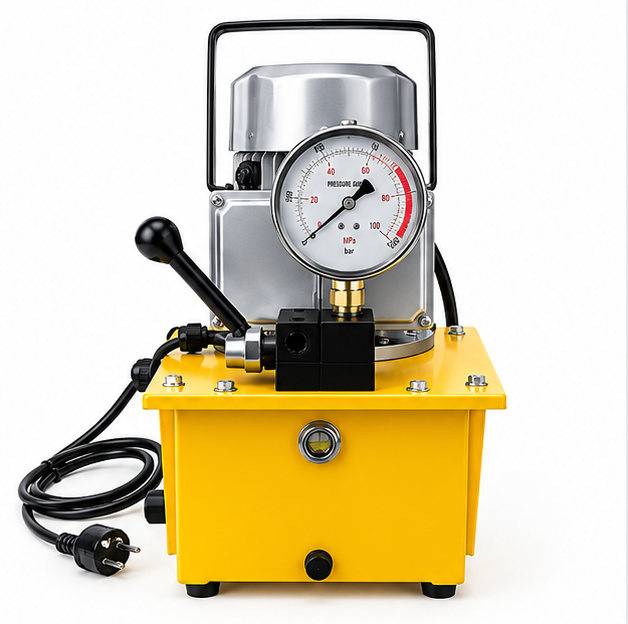
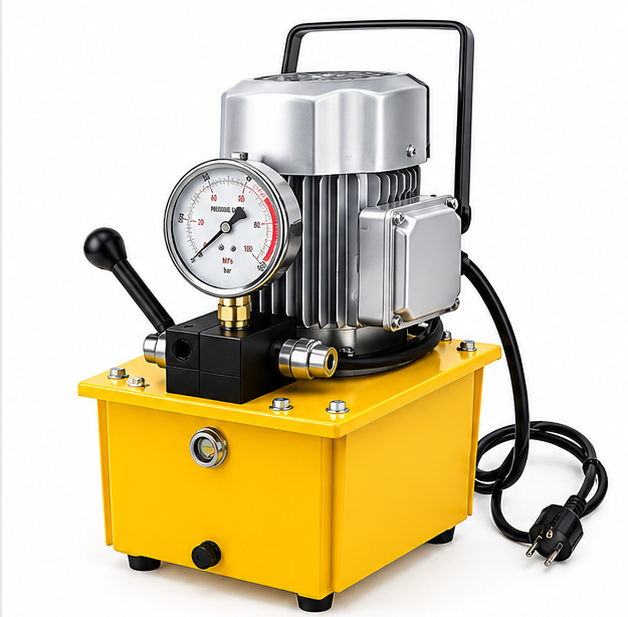
Manual directional valve with lever
A lever-operated directional valve is a straightforward option for applications where operations are occasional or the operator does not need both hands on the workpiece.
Potential advantages include simple manual control and fewer electrical control components.
Consider a lever-operated model if:
-
You perform relatively few operations.
-
The operator can safely use the lever during the task.
-
A simple control arrangement is preferred.
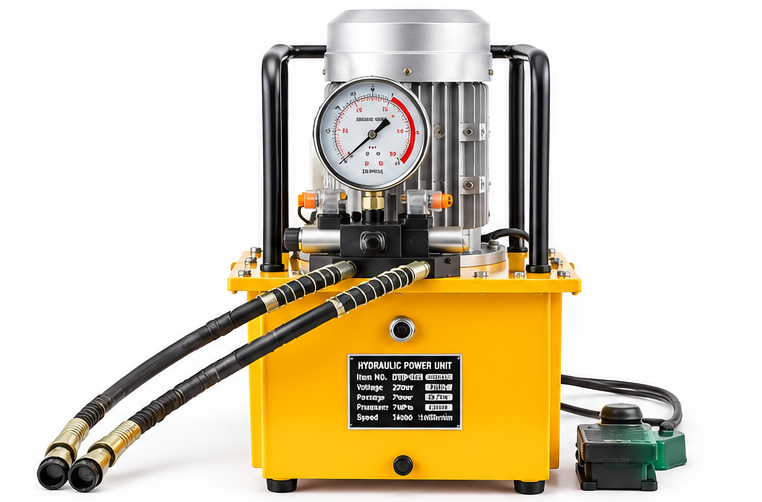
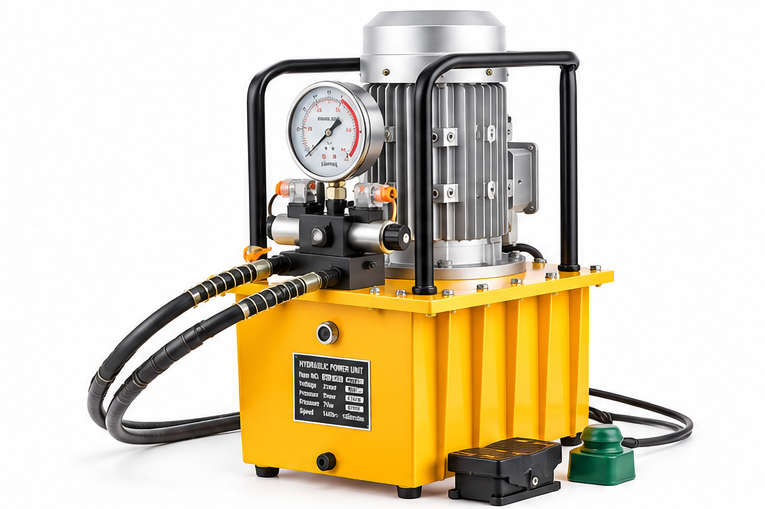
Foot pedal with electromagnetic valve
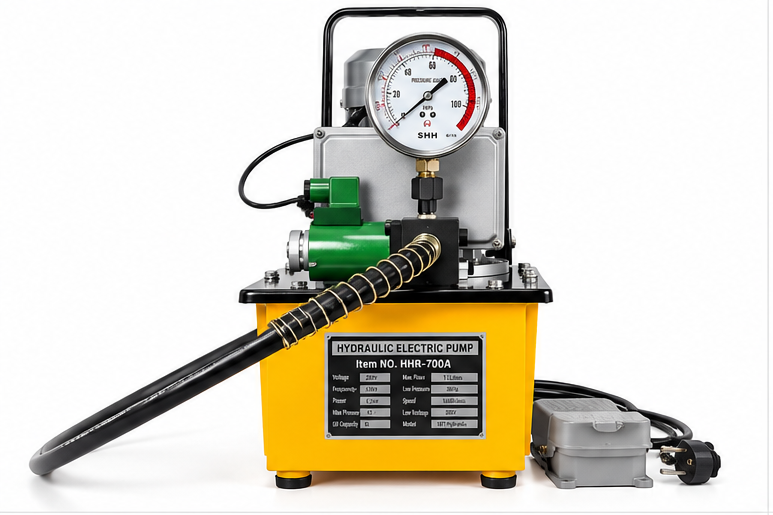
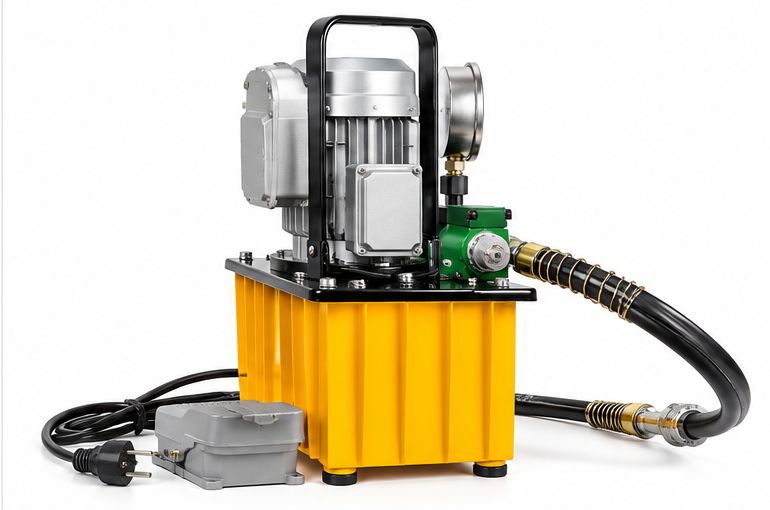
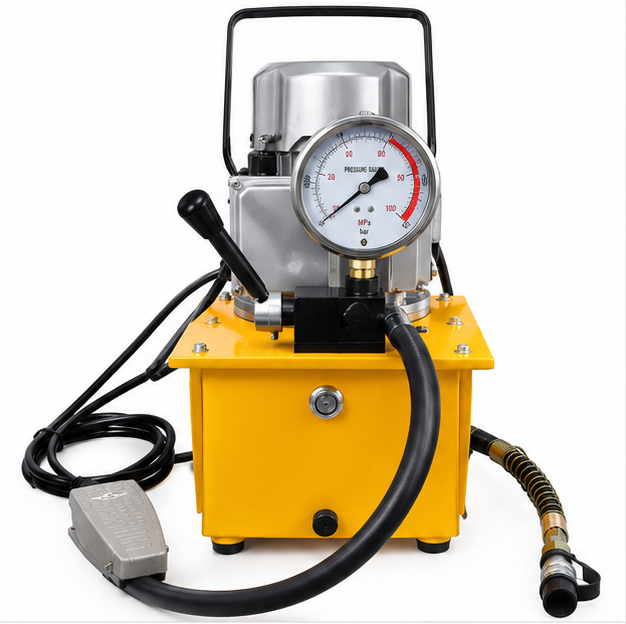
A foot-pedal hydraulic power unit lets the operator control the hydraulic function while keeping both hands available for positioning the workpiece.
This can be useful for cable crimping, where one hand holds the cable and the other aligns the die or connector.
Potential benefits include:
-
Less movement between the work area and the control lever.
-
More convenient positioning of the workpiece.
-
Reduced operator movement during repetitive work.
-
Potential time savings when many operations are performed per shift.
A saving of 3–5 seconds per operation is a practical estimate for some workflows, not a guaranteed result. For 100 operations, that would amount to approximately 5–8 minutes if the full saving is achieved each time.
The trade-off is that the foot pedal and electromagnetic valve coil introduce additional components that may require service. CraftOil can advise on replacement-part availability in Ukraine.
A foot-pedal control arrangement may also allow the motor to run while the operator controls hydraulic flow. Whether continuous motor operation is appropriate depends on the unit’s design, duty cycle and oil temperature. Avoid unnecessary idle running.
Electrical supply requirements
The following current figures are preliminary references from the supplied product specifications. Actual requirements depend on the motor nameplate, starting current, installation and operating conditions.
|
Motor power and supply |
Reference current |
General consideration |
|
0.75–1.2 kW, 220 V |
Approximately 4–6 A |
Suitable electrical outlet and circuit required |
|
1.5 kW, 220 V |
Approximately 7 A |
Check the circuit and avoid undersized extension leads |
|
3 kW, 220 V |
Approximately 15–18 A |
Dedicated circuit may be required |
|
3 kW, 380 V |
Approximately 6–7 A per phase |
Three-phase electrical supply required |
Circuit breakers, conductor cross-sections, protective devices and generator ratings must be verified against the motor nameplate and manufacturer’s documentation by a qualified electrician. Do not select electrical protection based on a reference current alone.
Should you choose 220 V or 380 V?
If a suitable three-phase supply is available, a 380 V version may be an appropriate choice for a 3 kW industrial application. Three-phase motors generally distribute the load across three phases and do not use the same single-phase starting-capacitor arrangement.
However, the exact efficiency, current, temperature and service life depend on the motor and operating conditions. Do not assume that the hydraulic performance is identical across all configurations without checking the specifications for the exact model.
Important for first start-up: The rotation direction of a three-phase motor depends on the phase sequence. Incorrect rotation may prevent pressure from developing and can damage the pump if it runs without proper lubrication. The initial connection and any phase-sequence correction must be performed by a qualified electrician according to the manufacturer’s commissioning procedure.
All 17 CraftOil Hydraulic Power Units Compared
Use this table to compare the supplied models by hydraulic circuit, control method, motor power, flow rate, reservoir capacity, electrical supply and weight.
|
Model |
Flow configuration |
Control |
Motor power |
Flow rate, L/min |
Tank |
Supply |
Weight |
|
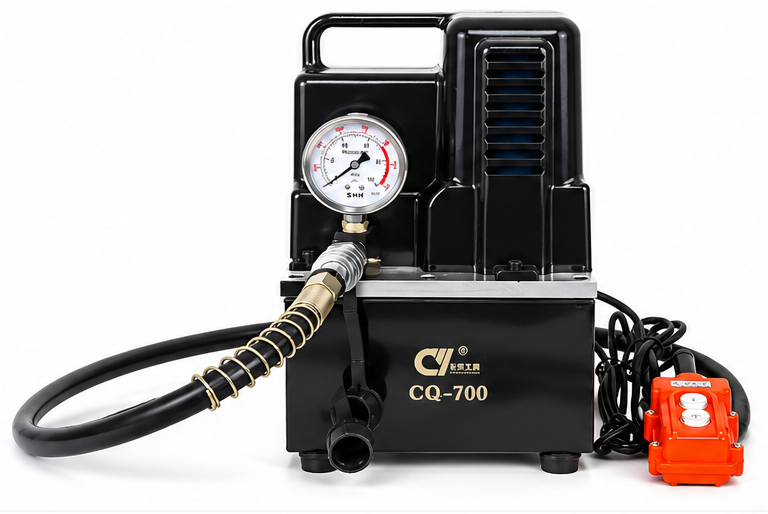
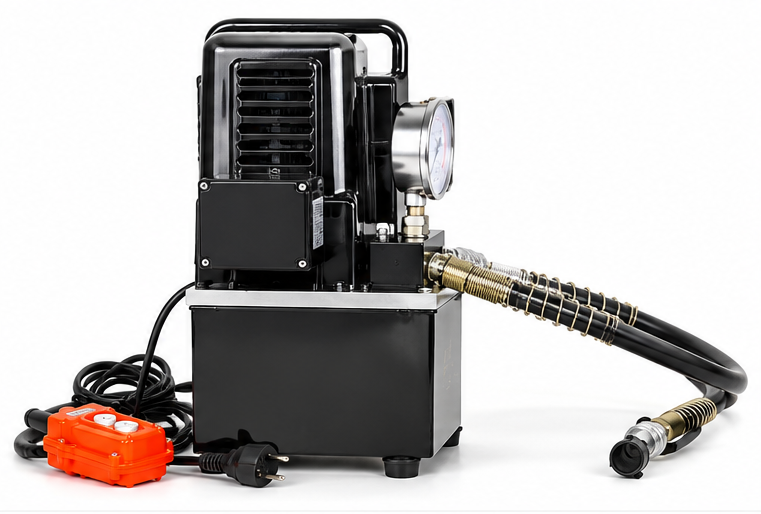
QQ-700 |
Single-flow |
Control unit, lever |
1.2 kW |
5 / 0.7 |
2 L |
220 V |
10 kg |
|
QQ-700-2 |
Dual-flow |
Foot pedal |
1.2 kW |
5 / 0.7 |
2 L |
220 V |
15 kg |
|
DYB-63A |
Single-flow |
Lever |
0.75 kW |
5 / 0.9 |
7 L |
220 V |
25 kg |
|
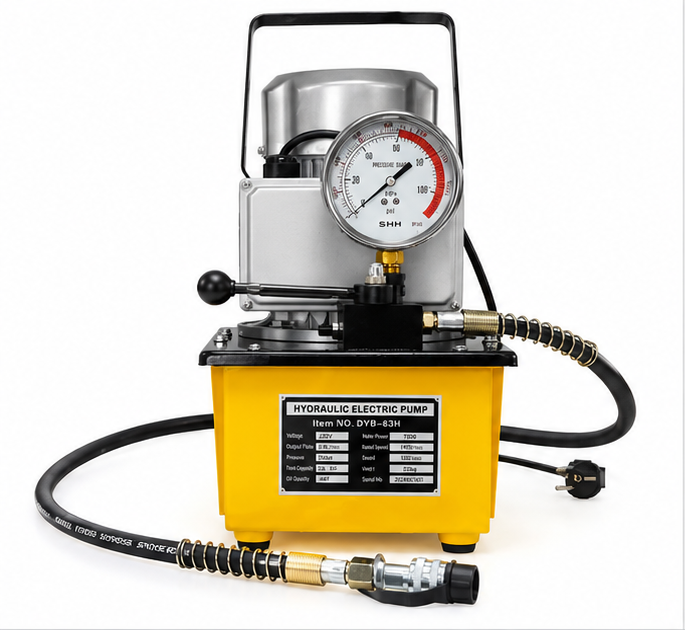
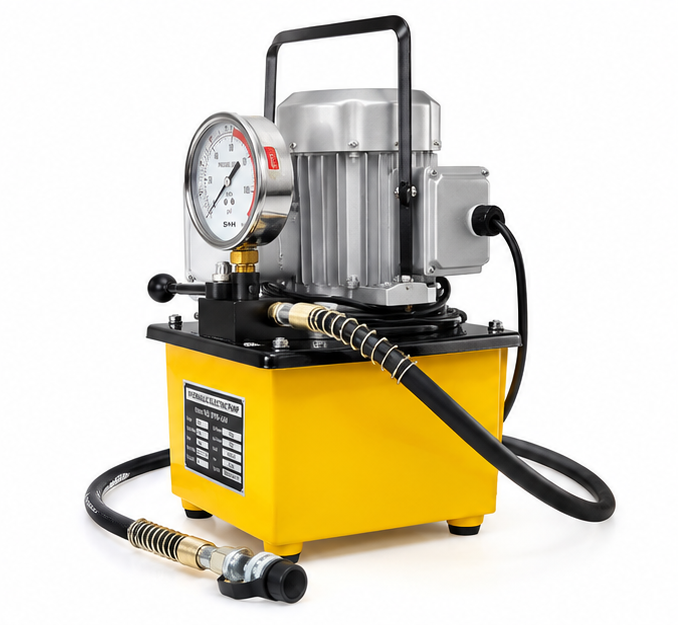
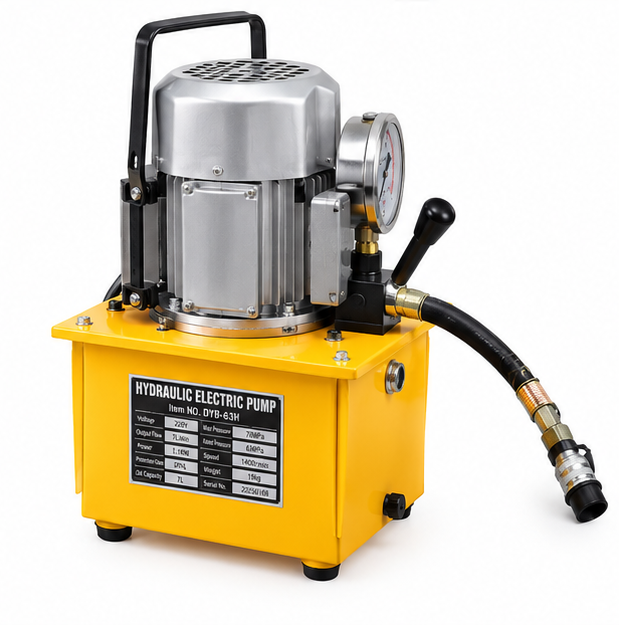
DYB-63H |
Single-flow |
Lever |
0.75 kW |
5 / 0.9 |
7 L |
220 V |
25 kg |
|
HHB-700A |
Single-flow |
Foot pedal |
0.75 kW |
5 / 0.9 |
7 L |
220 V |
25 kg |
|
HHB-700AB |
Dual-flow |
Lever and control unit |
0.75 kW |
5 / 0.9 |
7 L |
220 V |
25 kg |
|
DB075-D2 |
Dual-flow |
Foot pedal |
0.75 kW |
5 / 0.9 |
7 L |
220 V |
32 kg |
|
HHB-700D3 |
Three outlets |
Foot pedal |
0.75 kW |
5 / 0.9 |
7 L |
220 V |
30 kg |
|
DB-150S1 |
Single-flow |
Lever and control unit |
1.5 kW |
7.9 / 1.7 |
10 L |
220 V |
45 kg |
|
DB150-D1 |
Single-flow |
Lever |
1.5 kW |
7.9 / 1.7 |
10 L |
220 V |
45 kg |
|
DB150-S2 |
Dual-flow |
Lever and control unit |
1.5 kW |
7.9 / 1.7 |
10 L |
220 V |
45 kg |
|
DB150-D2 |
Dual-flow |
Foot pedal |
1.5 kW |
7.9 / 1.7 |
10 L |
220 V |
45 kg |
|
1.5 kW / 30 L |
Dual-flow |
Lever and control unit |
1.5 kW |
7.9 / 1.7 |
30 L |
220 V |
51 kg |
|
3 kW / 30 L |
Dual-flow |
Lever and control unit |
3 kW |
14 / 2.8 |
30 L |
220 V |
51 kg |
|
3 kW / 30 L, pedal |
Dual-flow |
Foot pedal |
3 kW |
14 / 2.8 |
30 L |
220 V |
52 kg |
|
3 kW / 30 L, 380 V |
Dual-flow |
Lever and control unit |
3 kW |
14 / 2.8 |
30 L |
380 V |
51 kg |
|
3 kW / 30 L, 380 V, pedal |
Dual-flow |
Foot pedal |
3 kW |
14 / 2.8 |
30 L |
380 V |
52 kg |
Flow rates are shown in first-stage / second-stage order as supplied. Confirm the detailed pressure-flow characteristics and circuit configuration in the documentation for the exact model.
Understanding the DB model codes
For the DB series, the supplied naming convention is:
-
DB075: 0.75 kW motor rating.
-
DB150: 1.5 kW motor rating.
-
S: manual directional-valve control.
-
D: electromagnetic control with foot pedal.
-
1: single-flow configuration.
-
2: dual-flow configuration.
Confirm the precise specification and configuration of the selected model before ordering.
Ready-Made Recommendations by Application
1. Mobile service teams and remote worksites
Models to consider: QQ-700 or QQ-700-2.
The QQ-700 weighs approximately 10 kg, while the QQ-700-2 weighs approximately 15 kg and provides a dual-flow configuration. Their compact format may be useful for mobile service teams and jobs where portability matters.
The supplied specifications list a 2 L reservoir. As a preliminary guideline, consider equipment with a working oil requirement of approximately 1.5 L or less, subject to the actual hydraulic circuit and usable reservoir volume.
For generator operation, verify the required continuous and starting capacity against the motor’s documentation. The generator must also provide a suitable voltage and stable supply.
2. Cable lug crimping workstation
Choose the configuration according to the crimping tool’s cylinder and the number of tools used.
-
HHB-700A: consider for a compatible single-acting tool and foot-pedal control.
-
DB075-D2: consider for compatible double-acting equipment with a suitable dual-flow circuit.
-
HHB-700D3: consider when up to three tools need to remain connected and the operator switches the hydraulic supply between them.
If you process different cable cross-sections throughout the shift, consider how much time is spent changing tools and whether keeping several tools connected would improve the workflow.
3. Workshop with occasional hydraulic tasks
Model to consider: DYB-63A.
The supplied specifications list a 0.75 kW motor, a 7 L reservoir, lever control, 220 V supply and a weight of 25 kg.
A lever-operated single-flow model may be suitable for occasional work with a compatible single-acting tool. Check the exact tool requirements before selecting the station.
4. Production workshop with repetitive operations
Models to consider: DB150-D2 or a 3 kW model with foot-pedal control.
The DB150-D2 combines a 1.5 kW motor, a 10 L reservoir, dual-flow configuration and foot-pedal control.
For higher-volume operations, a 3 kW model may be worth considering. Choose the 220 V or 380 V version according to the available electrical supply and the verified requirements of the motor.
The correct choice depends on cylinder displacement, required pressure, flow rate, operating cycle and oil-temperature limits—not simply the number of operations per shift.
5. Larger cylinders and demanding operating cycles
Models to consider: configurations with a 30 L reservoir.
A larger reservoir provides more oil volume and can offer greater thermal capacity than a smaller tank. The supplied preliminary sizing guideline suggests approximately 23–24 L of equipment working volume for a 30 L reservoir when allowing a reserve.
This is not a guaranteed maximum cylinder volume. Confirm usable oil capacity, cylinder displacement, the return stroke, hose volume and thermal requirements before purchase.
6. CraftOil hydraulic presses for cold-pressed oil production
CraftOil manufactures hydraulic presses for cold-pressed oil extraction. We can help assess a suitable hydraulic power unit for a particular press by reviewing its cylinder volume, required pressure, operating speed and expected duty cycle.
Provide the press model and its hydraulic specifications when enquiring. This helps us determine whether a listed station is suitable or whether a different configuration is required.
Accessories and Supplies Worth Considering
Some items are easier to select when ordering the hydraulic power unit rather than after the equipment has been installed.
Hydraulic oil
Hydraulic oil is not included in the standard package. The supplied product information lists ISO VG 32 and ISO VG 46 hydraulic oils, including HLP 32/46 and certain equivalents, for consideration. The correct grade must be confirmed against the equipment manual and operating conditions.
The required quantity depends on the model and the complete hydraulic circuit.
Additional high-pressure hoses
Consider additional hoses if the tool is located more than the supplied hose length from the station or if several tools need to remain connected.
Hoses, couplings and adapters must be compatible with the required pressure, connections and hydraulic circuit.
Protective caps for unused outlets
For units with multiple hydraulic lines, use suitable caps to protect unused connections from dust and debris. Contamination can damage hydraulic components or interfere with valve operation.
Spare high-pressure hose
A spare hose may be useful for mobile service teams or operations where downtime is costly. Inspect hoses regularly and replace damaged components rather than continuing to operate them.
Warranty, Service and Technical Support
CraftOil provides a 3-month warranty for the hydraulic power units covered by this catalogue.
Our service support includes advice on and, where applicable, repair of hydraulic power units, including:
-
Seal replacement
-
Pressure-gauge replacement
-
Hydraulic hose and quick-coupling replacement
-
Directional-valve inspection and repair
-
Foot-pedal and electromagnetic-coil replacement
-
Pump and motor diagnostics
Spare parts are available in Ukraine, subject to current stock. Availability of specific components should be confirmed before ordering.
We also provide technical consultation before and after purchase. Contact us for assistance with model selection, connection layouts, three-phase commissioning requirements and workstation planning.
Need help with a power unit purchased elsewhere? Contact CraftOil with the model and a description of the fault. We will review whether we can assist and advise on the next steps.
For customers in Ukraine, collection and dispatch options can be confirmed with our team. Delivery and service arrangements for other European destinations should be agreed individually.
Why Buy a Hydraulic Power Unit from CraftOil?
We manufacture hydraulic equipment ourselves
CraftOil manufactures hydraulic presses rated at 20, 30, 50 and 70 tonnes. Our experience with hydraulic equipment helps us understand the practical requirements of workshop and production applications.
We select equipment for the actual task
A hydraulic power unit should match the cylinder, circuit, required flow, pressure and operating cycle. If a simpler, lower-cost model is sufficient, we will tell you rather than recommend unnecessary capacity.
We explain limitations before purchase
We can discuss electrical supply requirements, reservoir capacity, oil heating, cylinder displacement and the differences between single-flow, dual-flow and multiple-outlet configurations.
Service and spare parts support
We can advise on service options, repairs and replacement components in Ukraine, and discuss support arrangements for other European destinations.
Convenient ordering
-
Same-day dispatch when the required model is in stock and the order is processed in time
-
Card payment and bank transfer options, subject to current availability
-
Payment options for business customers
-
Assistance selecting the appropriate hydraulic oil and accessories
Frequently Asked Questions
What is the difference between a single-flow and a dual-flow hydraulic power unit?
A single-flow unit supplies one hydraulic working line and is commonly used with compatible single-acting cylinders that return by spring, gravity or another specified mechanism.
A dual-flow unit supports a hydraulic circuit that supplies both working chambers of a compatible double-acting cylinder, allowing powered extension and retraction.
One or two cylinder ports provide an initial indication, but the cylinder type and valve configuration must also be checked.
What reservoir capacity do I need?
A preliminary sizing guideline is to allow 20–30% more oil than the connected equipment’s working oil requirement.
As initial estimates, the supplied model range corresponds to approximately:
-
2 L reservoir: up to 1.5 L equipment working volume
-
7 L reservoir: up to 5.5 L
-
10 L reservoir: up to 8 L
-
30 L reservoir: up to 23–24 L
These are planning estimates, not guaranteed compatibility limits. Check usable reservoir capacity, cylinder displacement, hose volume and the complete hydraulic circuit.
Can I connect a hydraulic power unit to a standard electrical outlet?
Many models rated at 0.75–1.5 kW are designed for 220 V single-phase power, but the outlet and circuit must meet the motor’s actual electrical requirements.
A 3 kW, 220 V model may require a dedicated circuit. A 3 kW, 380 V model requires a suitable three-phase supply. Have the installation verified by a qualified electrician.
Why choose foot-pedal control?
Foot-pedal control lets the operator keep both hands available for positioning the workpiece. This can improve workflow and reduce unnecessary movement during repetitive operations. The actual time saving depends on the task and workstation.
Is hydraulic oil included?
No. Hydraulic oil is not included in the standard package. The appropriate oil type and quantity depend on the model and operating conditions. CraftOil can advise on suitable options after checking the equipment manual.
What is the warranty period?
The specified warranty period is three months. Contact CraftOil for warranty conditions, current spare-parts availability and service arrangements.
Can CraftOil repair hydraulic power units purchased from other suppliers?
We consider repair enquiries for equipment purchased elsewhere. Send us the model number and describe the issue so that we can assess whether service is possible.
Can the units operate from a generator?
Some lower-power models may be suitable for generator operation, provided the generator meets the motor’s starting and continuous-load requirements. A generator’s rated power alone is not enough to confirm compatibility. For 1.5 kW and 3 kW units, check the required generator capacity with CraftOil and the equipment documentation.
Find the Right CraftOil Hydraulic Power Unit
Choosing the correct hydraulic power pack helps avoid unnecessary costs, unsuitable connections and operating problems.
Start with the cylinder type, then check the oil volume, required flow rate, operating cycle and electrical supply. If you are unsure, contact CraftOil with your equipment specifications.
Call: +380 68 277 9923
Explore the CraftOil hydraulic power-unit range or contact us for help selecting a model for your equipment.
CraftOil — hydraulic equipment built around real working requirements.


